
 Water damage drying
 Fire & smoke cleanup
 Mold remediation
 Storm response
 Sewage cleanup
 Reconstruction
Free visual inspection and a written scope of work before any mitigation begins - photos, moisture readings, and drying logs go in your claim file
The scope we write is the scope we bill. Anything new gets shown to you, in writing, before we touch it.
Get your free estimateFast, Reliable Water Damage Restoration Across New York
When a pipe bursts in a prewar co-op or a nor’easter backs up a basement sump pump, New York homeowners don’t have hours to spend comparing contractors. You need someone on the phone now, and a crew on the way with commercial drying equipment, not a pickup truck and a mop. Water Damage Restoration in New York means knowing which freight elevator to use on the Upper West Side, how to protect hallway carpets in a Chelsea co-op, and why lath-and-plaster walls dry slower than drywall. Since 2005, Dryden Restoration Brooklyn has handled every kind of water emergency this city throws at a building, from 15th-floor bathroom leaks to flooded garden-level apartments in brownstones. Call (607) 399-3439 any hour, and you’ll speak with a live person who can dispatch a background-checked, uniformed technician to your address in New York.
Why Dryden Restoration Brooklyn Is New York’s Preferred Water Damage Restoration Company
New York homeowners have been burned before, by contractors who no-show, by prices that double at the door, by repairs that fail three weeks later. That’s exactly the pattern we built this company to break. Every job we take starts with a written price before a tool is touched. Not an estimate with fine print. A number, on paper, that does not change.
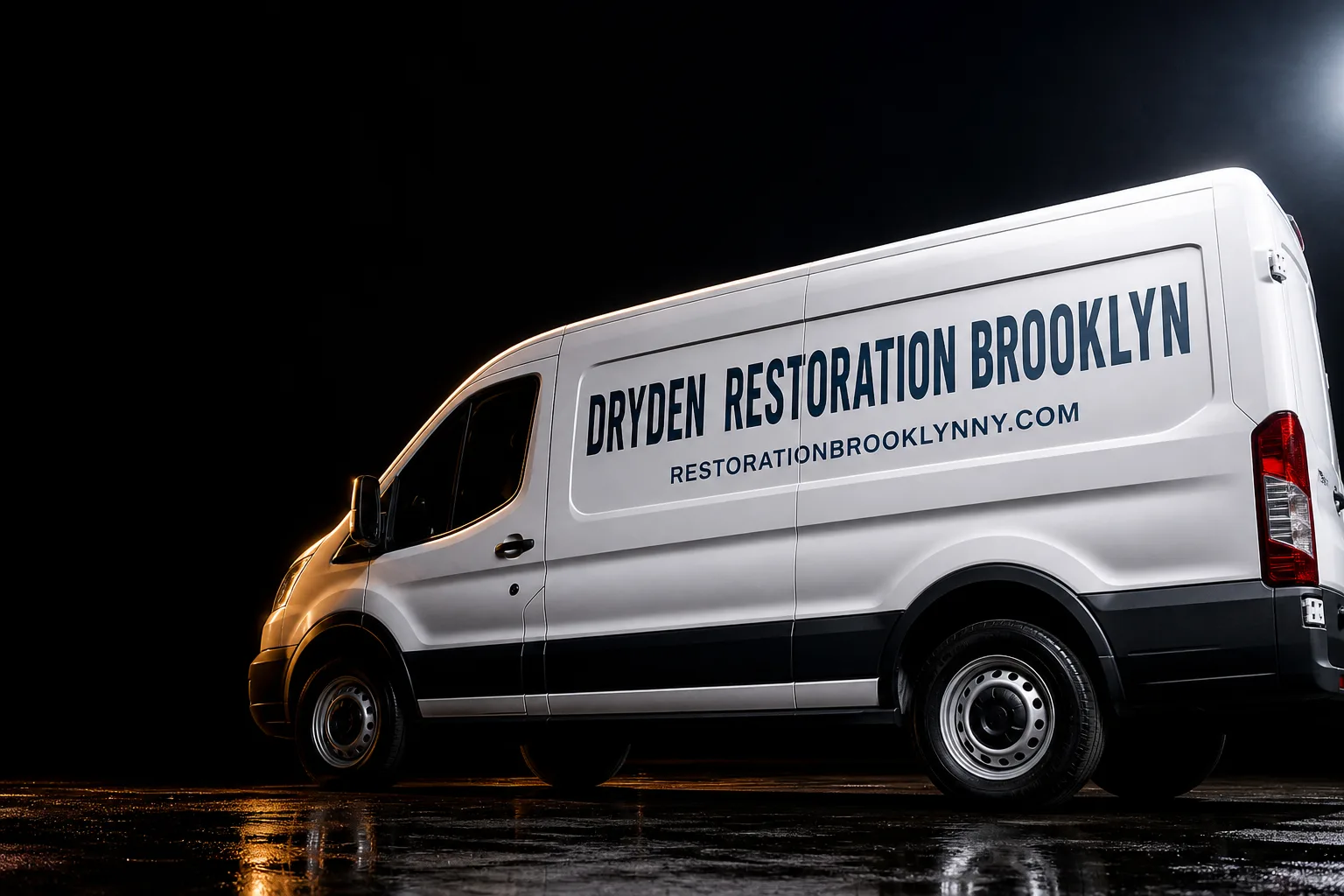
Our technicians arrive in Dryden uniforms, background-checked and trained to IICRC, RIA, and IFA standards. They carry Dri-Eaz and Phoenix drying equipment, the same machines large commercial restoration crews use. And every repair carries our 365-Day Done Right Promise in writing: if a covered repair fails within a year, we return and make it right at no charge. Carl Brandt, who leads our team, insists on that guarantee for every job, large or small.
We know New York buildings from the inside of their walls. Steam heat systems that corrode cast-iron risers. Brownstone stoops that channel rainwater into basement areaways. Co-op board protocols that require floor protection and freight elevator scheduling before anyone unrolls a hose. This isn’t generic restoration knowledge. It’s what you need when water is spreading through a 10th-floor apartment at 2 a.m.
Restoration work we handle
Water Extraction in New York
Water extraction in New York typically costs $350 to $800 for a single room, and it’s the first step that stops active damage from spreading. In this city’s older buildings, extraction often means pulling standing water from hardwood floors laid over a subfloor that has soaked for hours, while water has already wicked into lath-and-plaster walls below the visible waterline. We use truck-mounted and portable extraction units that remove hundreds of gallons before drying equipment ever gets plugged in.
Extraction from Hardwood and Subfloor Assemblies
Older New York apartments rarely have slab foundations. You’ve got wood joists, a plank subfloor, and usually a hardwood finish floor on top. Water sits in that assembly and migrates sideways. We extract from the surface first, then use Injectidry systems to pull water from inside the floor cavity, which is the difference between a floor that refinished and one that tore out.
Category 2 Water and Contamination Protocols
When a radiator supply line bursts, the water is Category 2, meaning it has been through the system and may carry biological contaminants. We treat affected areas with antimicrobial agents after extraction and before drying, because in a New York apartment with neighbors on all sides, you cannot afford to leave that moisture sitting in wall cavities.
Emergency Water Removal in New York
Emergency water removal in New York runs $500 to $1,200 for a typical apartment incident, depending on the number of affected rooms and the floor level. In a city where a top-floor leak channels straight down through central risers and ceiling bays, speed is the single biggest factor in whether you’re drying out a bathroom or rebuilding a stack of kitchens. We treat emergency water removal as a same-day dispatch, not a next-week appointment.
Vertical Water Migration in High-Rises
Water obeys gravity, and in post-war high-rises it follows the path of least resistance, which is usually down through pipe chases and electrical conduit openings. We have seen a small bathroom leak on the 14th floor present as ceiling damage in three apartments below it. That’s why emergency removal starts by tracing the water’s vertical path, not just extracting where it pooled.
Co-op and Condo Board Access Protocols
New York buildings have rules, and those rules take time. Freight elevator reservations. Carpet protection on hallways. Proof of insurance before the super lets anyone upstairs. Our crews arrive prepared for these protocols, with floor protection runners and the paperwork building management needs, so the delay doesn’t let moisture soak deeper into plaster and structural wood.
Trusted Brands We Service in New York
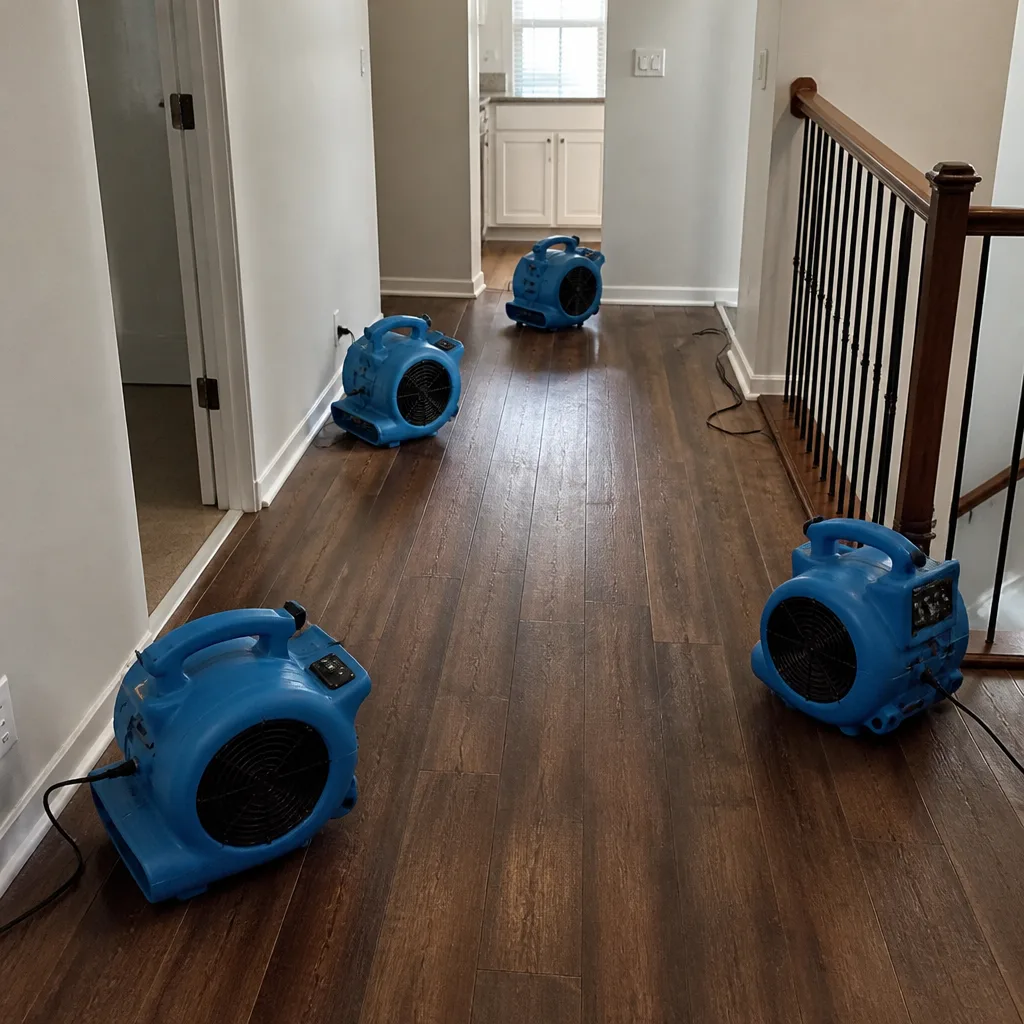
We run Dri-Eaz and Phoenix drying equipment on almost every job we do in New York, along with B-Air air movers and Injectidry floor drying systems when the situation calls for it. These are the brands commercial restoration companies use, and they’re the reason we can dry a prewar apartment to a stable moisture content in three to five days instead of two weeks. Because we stock replacement parts locally from our New York City office, we don’t lose a day waiting on a filter or a pump when a job is mid-dry.
Common Water Damage Restoration Problems We See in New York Homes
Every city has water damage. New York has water damage with a specific set of complications, and after two decades here, we have seen them all.
- Cast-iron plumbing failures in prewar buildings. Original cast-iron waste lines and supply risers in brownstones and prewar co-ops corrode from the inside over a century of use. When they crack, often during a February freeze-thaw cycle, the water release is sudden and the affected area is usually inside a wall.
- Central risers channeling water between floors. In post-war high-rises, one unit’s leak rarely stays in that unit. Water travels down through pipe chases and electrical openings, which means your ceiling stain may have originated three floors above you.
- Roof drains overwhelmed by nor’easters. Aging roof drains on prewar buildings clog with leaves and pigeon debris, then a nor’easter dumps three inches of rain in six hours. Top-floor apartments take that water down interior walls, behind baseboards, into closets.
- Lath-and-plaster walls holding moisture longer. Drywall dries in a couple of days with the right equipment. Lath and plaster, common in buildings from the 1920s and 30s, holds water differently, and if you don’t measure moisture content at multiple depths, you’ll close a wall that’s still wet inside.
See the difference
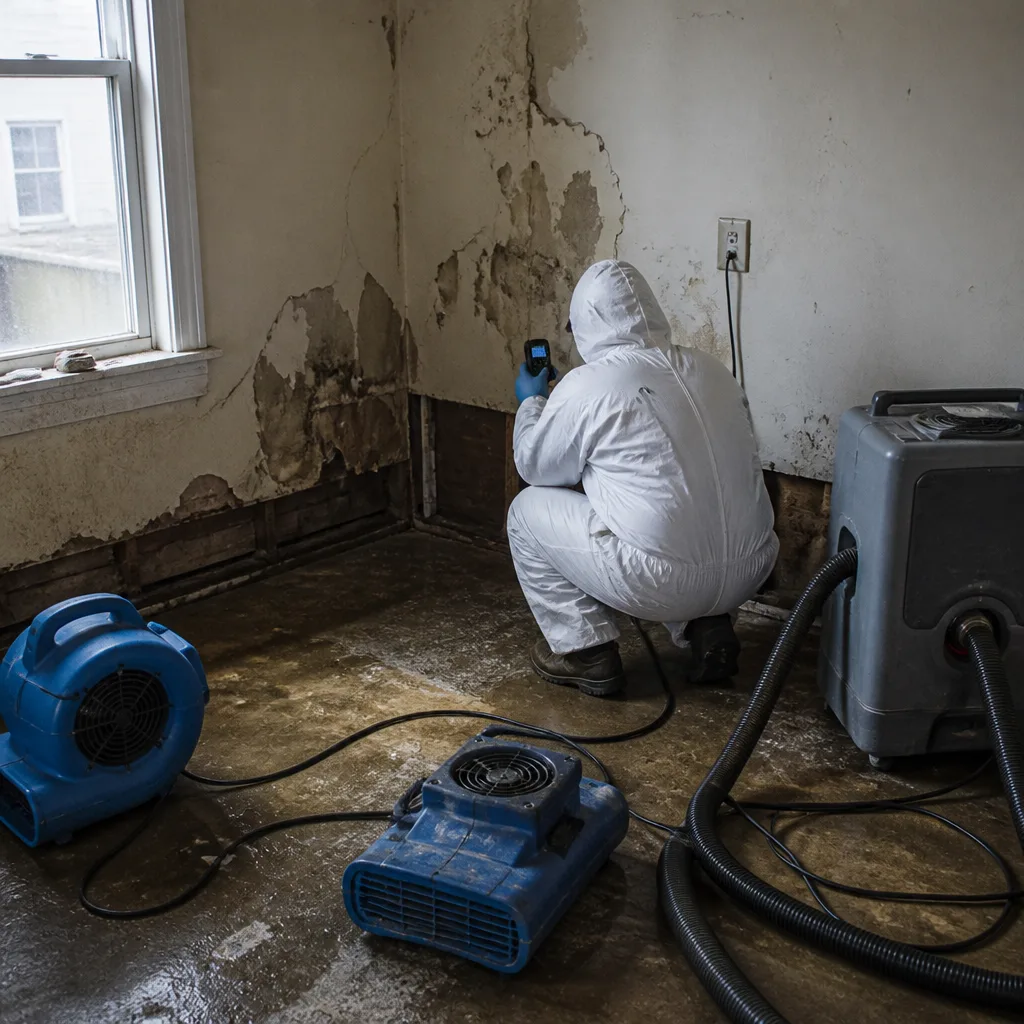 Before
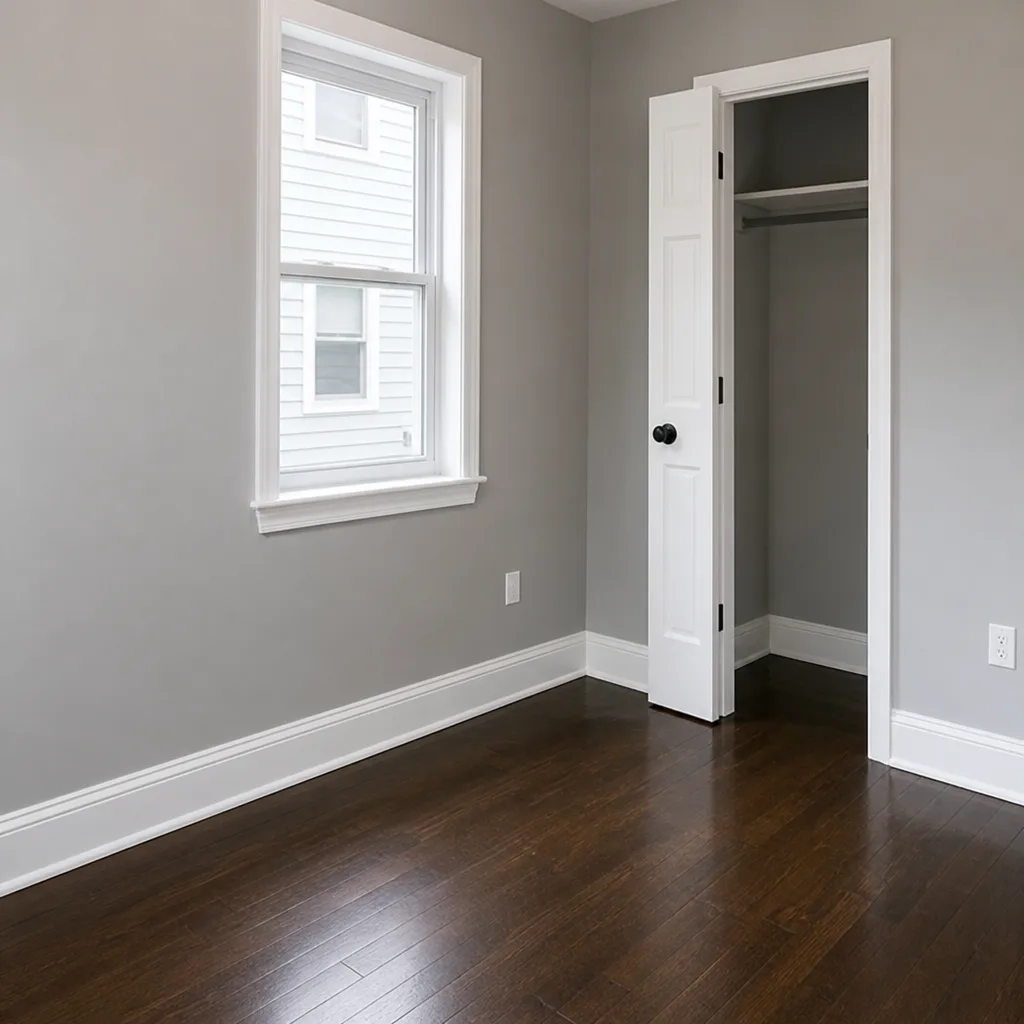 After
After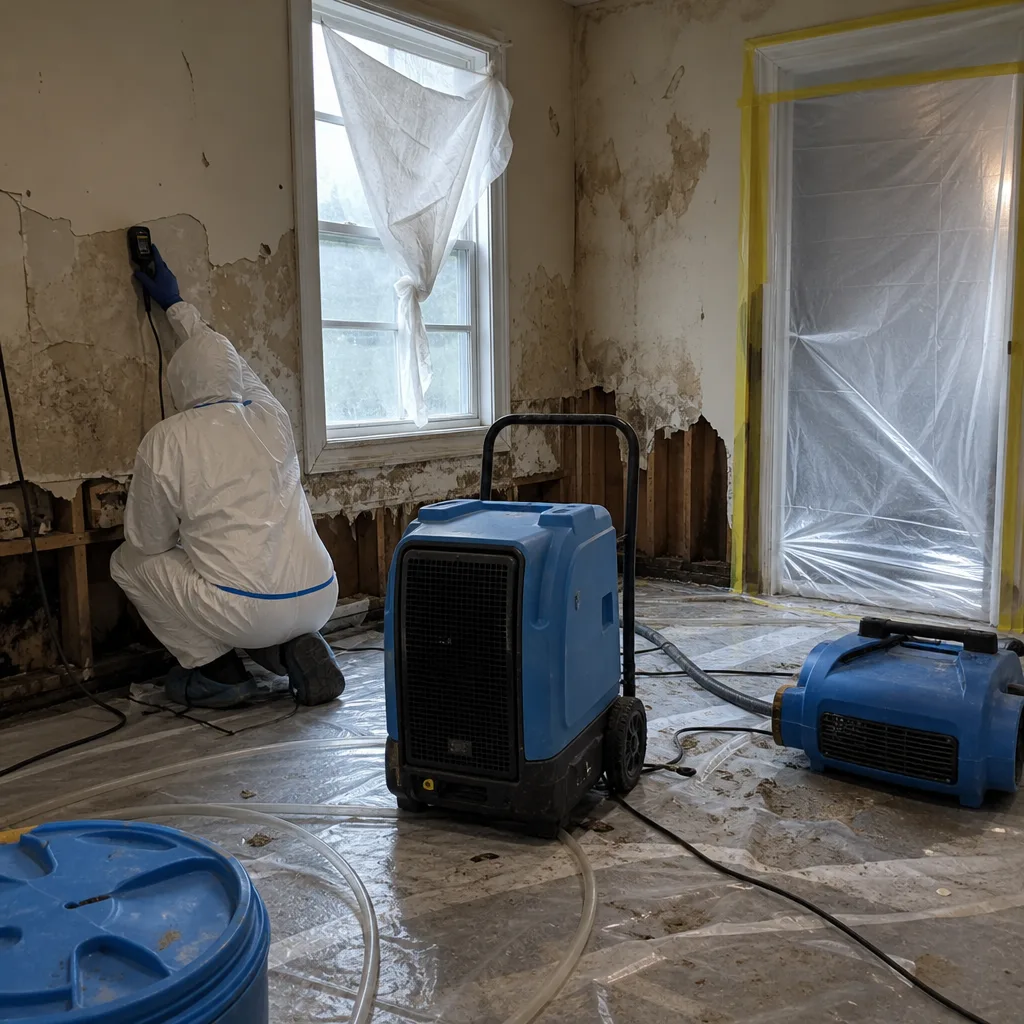 Before
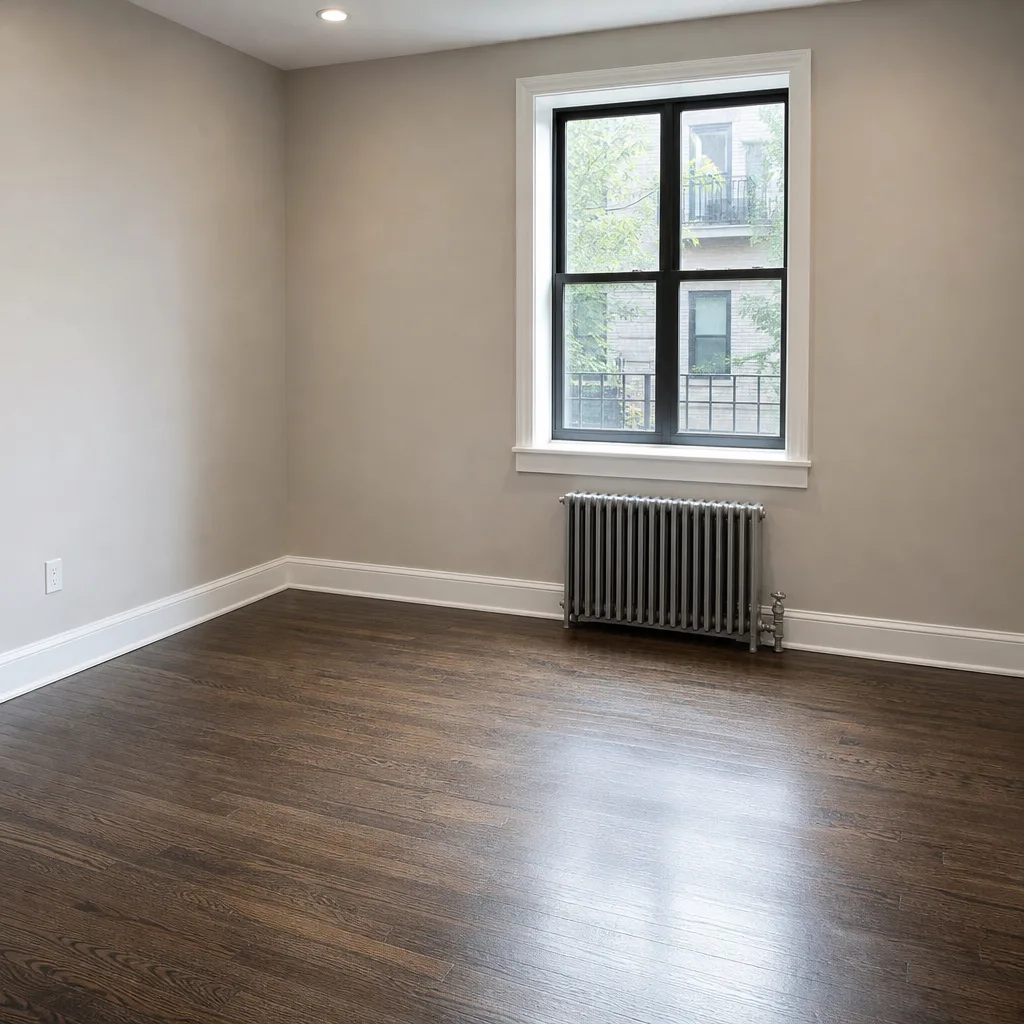 After
After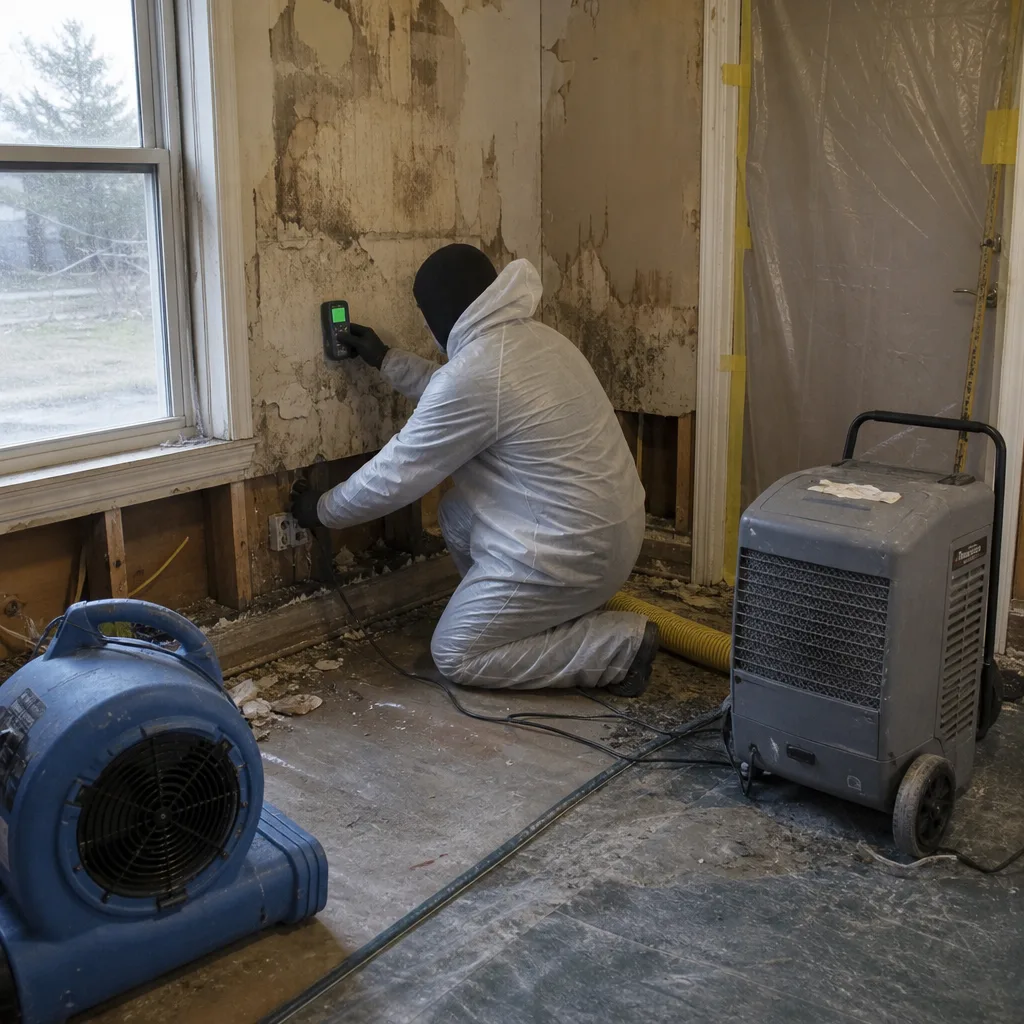 Before
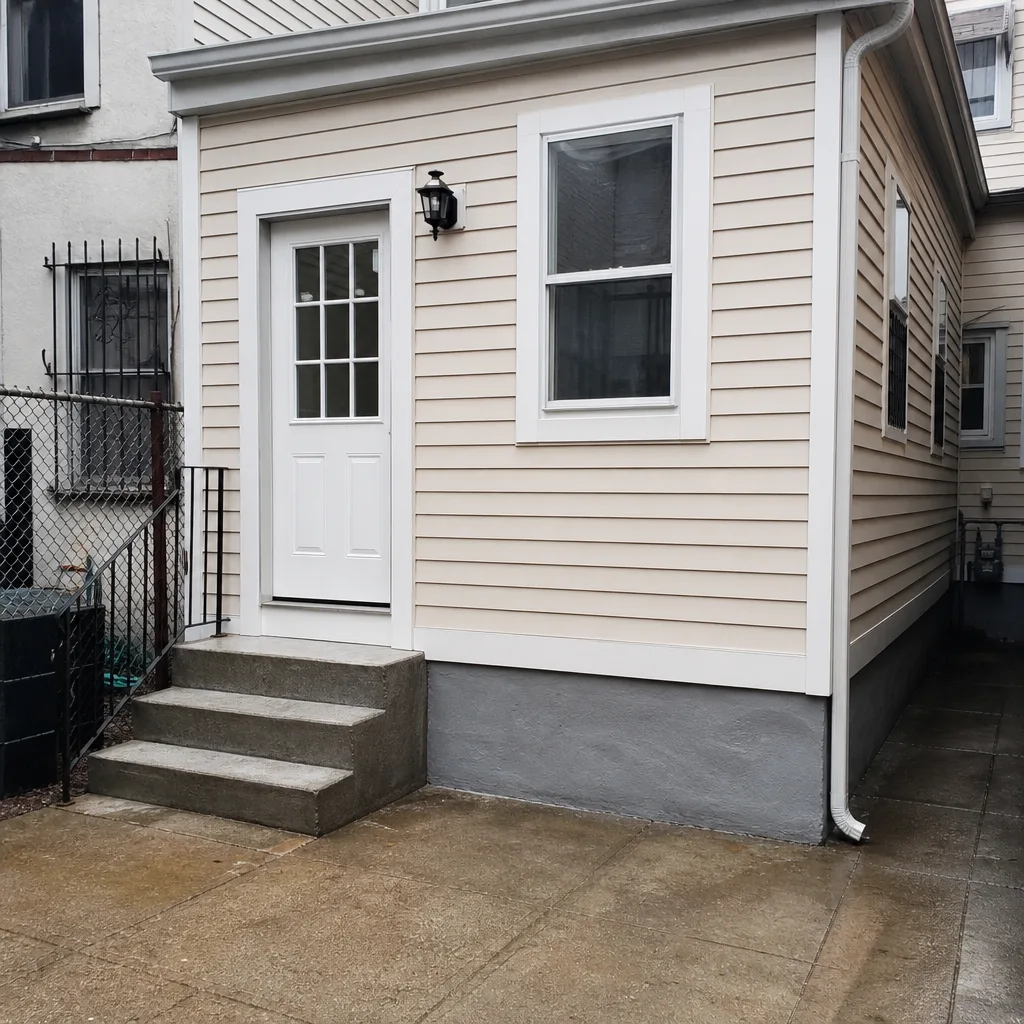 After
AfterPricing for Water Damage Restoration in New York, NY
What you pay depends on how much water, how many rooms, and how old the building is, but here are real numbers for the New York market. Emergency water extraction runs $350 to $800 per room. Structural drying with professional dehumidifiers and air movers adds $800 to $2,500 depending on square footage and the age of the wall assemblies. Burst pipe restoration in a prewar apartment, including extraction, drying, and minor repairs, typically lands between $2,500 and $6,000. A flooded basement in a brownstone with cast-iron plumbing can run $3,000 to $8,000 once you include sewage handling and sanitization. We give you a written price before any work begins, so the number we quote on the phone is the number you sign, and the number you pay.
We Also Serve Cities Near New York
Our crews cover all five boroughs and the neighborhoods around New York, including New York City’s immediate metro. That means homeowners in Brooklyn, Sunnyside, Woodside, and Howard Beach can count on the same written pricing, the same 365-Day Done Right Promise, and the same live-person phone answer, any hour of the day or night.
Serving New York, NY - Our Local Coverage Area
We’re based in the New York area and know this community well. Use the map below to see our service coverage - if you’re nearby, we can almost certainly help.
FAQs About Water Damage Restoration in New York
Co-op and condo boards can delay access to a damaged unit by requiring proof of insurance, freight elevator reservations, and hallway protection before contractors are allowed in. That delay, often 30 to 60 minutes, is exactly when water soaks deeper into lath-and-plaster and structural wood. We arrive with the paperwork building management needs and floor protection runners ready, so access gets approved on the first try. Call (607) 399-3439 and we’ll coordinate with your board or managing agent directly.
Most prewar apartments dry to a stable moisture content in three to five days with the right equipment, which includes Dri-Eaz LGR dehumidifiers, Phoenix or B-Air air movers, and Injectidry floor systems for hardwood assemblies. Lath-and-plaster walls extend that timeline by a day or two compared to drywall. We check moisture levels daily with meters and document the readings, so you see progress in writing.
Yes, and we’ve responded to exactly that scenario. In high-rise buildings, water follows pipe chases, electrical conduits, and structural openings straight down. A 15th-floor toilet supply line that runs for 20 minutes can show up as sagging ceiling paint and wet insulation in units on the 12th, 10th, and even lower floors. That’s why emergency response in New York means tracing the vertical path, not just cleaning up the visible puddle.
Most of the time, no. You can stay in your apartment while we extract water and run drying equipment, though the air movers are loud and the dehumidifiers raise the room temperature by several degrees. The exception is when Category 3 water, meaning sewage or outside flood water, has contaminated the space, in which case we recommend temporary relocation until sanitization is complete. We’ll give you an honest answer for your specific situation before work starts.
We treat the water as Category 2 at minimum and often Category 3, because 100-year-old cast-iron pipes carry decades of internal corrosion and biological material. That means antimicrobial treatment after extraction, not just drying. We also know that old cast-iron often cracks in unheated perimeter walls during freeze-thaw cycles, so we inspect the full plumbing run, not just the visible break, before we sign off that the source is resolved. Call (607) 399-3439 for a free estimate and a written scope of work.
Call Dryden Restoration Brooklyn for Water Damage Help in New York, NY
If water is spreading through your New York apartment, house, or building right now, call (607) 399-3439. A live person answers, 24 hours a day, seven days a week. We’ll give you a written price before any work starts, send background-checked uniformed technicians to your address, and back every repair with our 365-Day Done Right Promise. That means if a covered repair fails within a year, we return and fix it at no charge, in writing. We respond to water damage emergencies across New York, from prewar co-ops to postwar high-rises to brownstone basements. You get real answers, real pricing, and a guarantee you can hold us to.
Written by Carl Brandt, Owner at Dryden Restoration Brooklyn, serving New York homeowners with water damage restoration since 2005.