
Last updated October 16, 2026
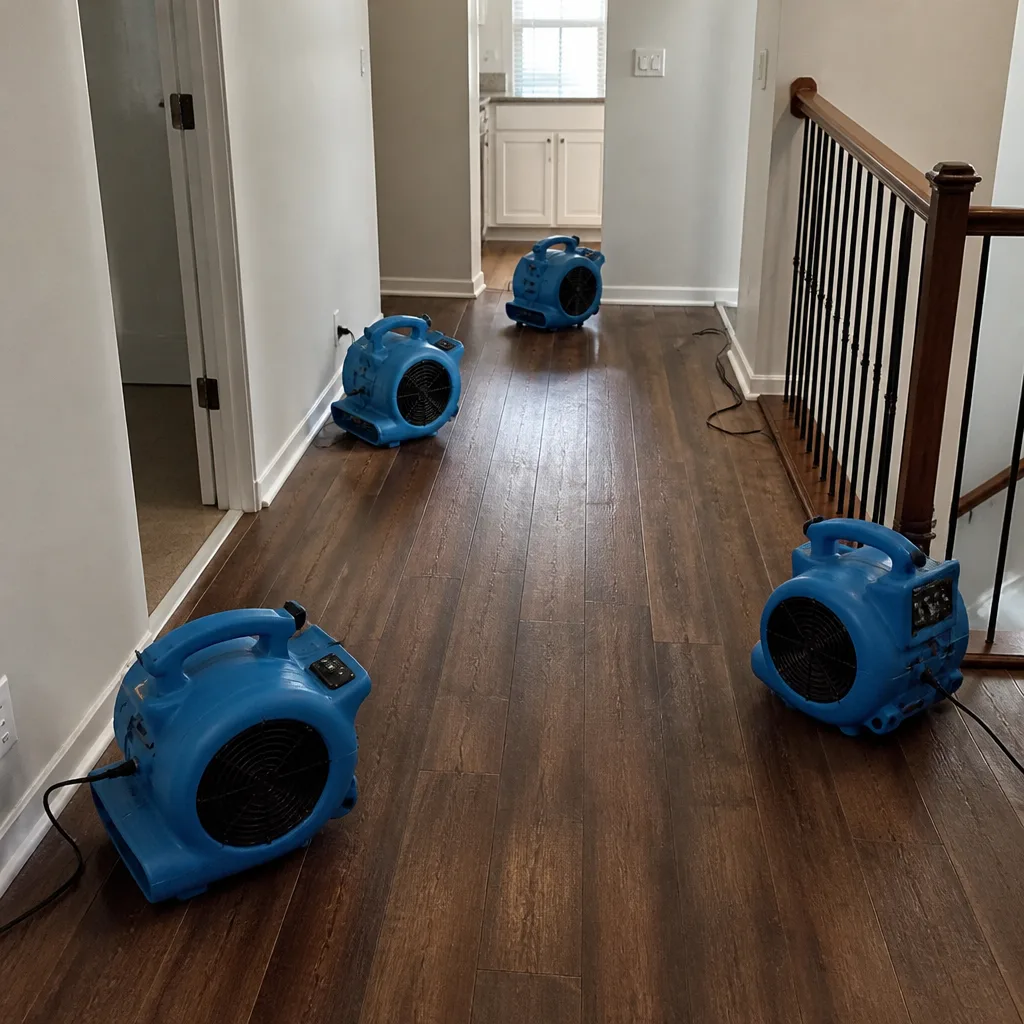 Water damage drying
 Fire & smoke cleanup
 Mold remediation
 Storm response
 Sewage cleanup
 Reconstruction
Free visual inspection and a written scope of work before any mitigation begins - photos, moisture readings, and drying logs go in your claim file
The scope we write is the scope we bill. Anything new gets shown to you, in writing, before we touch it.
Get your free estimateDamage Restoration Warning Signs: A Brooklyn Homeowner’s Reference Guide
A musty smell in a Brooklyn basement is so common that most owners stop noticing it. They chalk it up to “old building smell” and move on. But that same smell, when measured with a basic air quality test, frequently points to active mold growth behind a finished wall that has been spreading for months, feeding on moisture trapped inside the cavity. This guide focuses on the signals that appear well before a ceiling collapses or a floor buckles. The subtle ones. The ones that look like normal old-house quirks until they aren’t. We’ll walk through what to look for in a Brooklyn rowhouse, brownstone, or brick detached home, what each sign actually means about the water’s point of entry, and when a $30 tool beats a $3,000 guess.
Quick Answer
Water damage in a Brooklyn home almost always announces itself through one of five early signals: a musty or earthy smell that persists after airing out, an unexplained rise in your water bill, a white chalky deposit blooming on masonry walls, a humid feeling in the basement that won’t drop below 60% relative humidity, or a water stain on a ceiling or wall that is cold or damp to the touch. Any one of these, alone, is worth a professional assessment. Two or more together usually means active water intrusion that will not self-correct.
Restoration work we handle
Table of Contents
- Efflorescence on Masonry: Reading the White Dust
- Spalling Brick: When the Face Pops Off
- Cracks: Settling vs. Active Water Movement
- The Smell Test: Humidity Thresholds That Matter
- Water Stains: Old History vs. Active Leak
- Water Bills and Hidden Leaks: The Numbers Don’t Lie
- Grout, Caulk, and the Slow Drip You Can’t See
- Common Mistakes to Avoid
- When to Call a Professional
- Frequently Asked Questions
Efflorescence on Masonry: Reading the White Dust
Walk down to your basement and look at the exposed brick or block walls. If you see a white, chalky, crystalline dust on the surface, that is efflorescence. It’s not mold, and it’s not paint failure. It’s salt. Water moves through the masonry, dissolves minerals inside the brick and mortar, and carries them to the surface. When the water evaporates, the salt stays behind. The pattern of that salt tells you where the water is coming from. A uniform, powdery film spread across a large area usually means moisture is wicking up from the foundation or pushing in through the wall from outside. A concentrated, crusty white line following a specific vertical path usually means a leak above, draining down.
In Brooklyn, we see efflorescence most often in homes built before 1930, especially brownstones in Park Slope, Bed-Stuy, and Crown Heights where the original waterproofing is gone or was never installed. The presence of efflorescence does not always mean active damage is happening right now. But if you brush the salt off and it returns within a few weeks, the wall is still moving water. That is an active condition, not a cosmetic one. The fix is almost never sealing over it with paint, which traps moisture and accelerates spalling. The fix starts with finding the water’s point of entry.
Spalling Brick: When the Face Pops Off
Spalling is what happens when brick gets wet repeatedly and freezes. Brooklyn winters deliver exactly that cycle. Water soaks into the brick’s face, the temperature drops below freezing, and the water expands by about 9% as it turns to ice. That expansion pushes the surface of the brick outward until a thin layer pops off. You’ll see brick fragments or red dust on the ground below, and the exposed inner brick looks rougher and darker than the surrounding surface.
On a Brooklyn brownstone, spalling usually starts at the water table line, where groundwater and splash-back from the sidewalk keep the base of the facade wet. It also shows up under window sills, below parapets, and anywhere a downspout dumps water directly against the wall. If spalling is left unaddressed, the brick loses its protective fire skin and starts absorbing water even faster. A wall that spalls for five years can become a wall that needs structural repointing, not just cosmetic repair. The early signal is brick flakes on the ground. If you see them, the water has already been at work for at least one full freeze-thaw season.
Cracks: Settling vs. Active Water Movement
Every old Brooklyn house has cracks. Brownstones and rowhouses settle over decades. Plaster cracks that run in a straight vertical line or a diagonal from the corner of a door or window are usually just the house doing what old houses do. They widen and narrow with the seasons and don’t mean water is entering. Those are the cracks you patch and forget.
The cracks that matter are different. A crack that is getting wider at the top than the bottom, or one that appears suddenly after a heavy rain, is a structural signal. So is a stair-step crack following the mortar joints on a brick wall, especially if it runs from the foundation up toward a corner. In rowhouse construction, the shared party wall between two homes can hide water movement that shows up first as a crack on your side while the source is on the neighbor’s roof or parapet. Look for rust-colored staining along the crack. That’s dissolved iron from old brick or nails, and it means water has been moving through that crack long enough to oxidize metal. A clean, dry crack is a question mark. A rust-stained crack is a leak.
The Smell Test: Humidity Thresholds That Matter
The nose is a useful instrument and an unreliable one. It tells you something is wrong but not how wrong, or where, or whether it’s active. A basement that smells musty after every rain is different from one that always smells a little basement-y. Here are the thresholds we tell Brooklyn homeowners to take seriously.
- Relative humidity consistently above 60% is the threshold where mold begins to grow on organic surfaces. A $30 digital hygrometer from any hardware store gives you an objective number instead of a hunch.
- Relative humidity above 70% for more than 48 hours means surfaces are staying damp long enough for mold to bloom and dust mites to multiply. This is also the range where stored boxes start to smell and paper curls.
- A smell that gets stronger when the heat or AC runs means the source is inside the ductwork or inside a wall cavity connected to the return air path, not in the open room air.
- A smell that spikes after rain means bulk water is entering somewhere, not just humidity. The difference matters. Humidity is managed with dehumidifiers and airflow. Bulk water needs to be stopped at the source, because it’s carrying dissolved minerals, bacteria, and sometimes sewage into your home.
In our experience, Brooklyn basements hold humidity longer than above-grade floors because they’re below the dew point more of the year and built against soil that stays damp. A dehumidifier that runs constantly and never reaches the set point is not a dehumidifier problem. It’s a water entry problem. The machine is doing its job. The house is losing.
Water Stains: Old History vs. Active Leak
A brown ring on a ceiling is a record of a past event. It tells you water was there. It does not tell you whether water is still there. Before you patch the stain and repaint, you need to know which situation you’re in. The test costs about two dollars and takes 24 hours.
- Cut a square of clear plastic sheeting, roughly 12 by 12 inches.
- Tape it over the stain with painter’s tape on all four edges. You want a complete seal.
- Wait 24 hours.
- Lift the plastic and look at its underside.
If the underside of the plastic is dry and the stain is unchanged, the leak is old. You have a cosmetic repair. If the underside of the plastic is beaded with moisture or fogged, the stain is still receiving water from somewhere. In that case, patching the drywall is pointless until the source is addressed. The stain will return, often within weeks, because the moisture behind the ceiling is still active. In a Brooklyn rowhouse, an active ceiling stain on the top floor usually traces back to the roof or parapet flashing, not the ceiling itself. The ceiling is just where the water shows up.
Water Bills and Hidden Leaks: The Numbers Don’t Lie
Your water meter knows things you don’t. A slow leak behind a wall, under a slab, or inside a wall cavity uses water continuously, and that shows up as a bill that creeps upward month over month without a matching change in your habits. The NYC Department of Environmental Protection bills most Brooklyn homes on a metered basis now, which means you have the data. Here’s how to read it.
Pull your last 12 months of water bills. If your usage in the winter months, when you’re not irrigating or filling pools, is the same or higher than your summer usage, something is running. A running toilet can account for a few hundred gallons a month. A pinhole leak in a supply line inside a wall can account for thousands. Neither one shows up as a visible puddle until the drywall finally fails. The bill tips you off months before the wall does. If you see a steady climb and can’t find the source at the fixtures, shut off the main valve and check the meter. If the dial still moves with everything off, the leak is hiding in the building envelope.
Grout, Caulk, and the Slow Drip You Can’t See
Tile grout and tub caulk are water management systems, not decorations. When the caulk along a tub or shower base pulls away from the wall, every shower sends water behind the tile. It travels down the wall, pools on the subfloor, and works its way into the ceiling below. The first sign is often a stain on the ceiling of the room underneath the bathroom, or a quarter-round of molding that starts to swell and separate from the floor.
Cracked grout lines on a bathroom floor let water sit between the tile and the underlayment. On a Brooklyn home with a pre-war floor structure, that underlayment is often a mud bed, and mud beds hold water like a sponge. The tile can look fine for years while the structure underneath rots. If you see cracked grout, especially in the low spot of the floor where water pools, don’t just regrout. Lift a tile or two and check what’s underneath. The grout crack is the invitation. The water has been accepting it for a while.
Common Mistakes to Avoid
- Painting over efflorescence or a water stain without addressing the water source. The stain comes back, the paint fails, and the trapped moisture makes the underlying material deteriorate faster.
- Using a regular box fan to dry out a flooded basement. Fans evaporate water into the air, which raises the relative humidity and spreads moisture through the house. Professional drying uses air movers, dehumidifiers, and psychrometric readings, which measure the moisture content of the air and materials, not just the look of the floor.
- Trusting the nose alone. By the time a musty smell is strong enough to notice consistently, the mold colony behind the wall is usually well established. A $30 hygrometer gives you a number. A mold test gives you a species. Both are better than a hunch.
- Assuming a brownstone’s built-in “character” is harmless. Some old-house quirks are benign. A rust-stained crack, a spalling brick face, or an efflorescence bloom that returns within weeks are not.
- Sealing a basement wall from the inside with waterproof paint. It traps moisture inside the masonry and accelerates spalling and structural deterioration. The water needs a path out or a barrier outside, not a coat of paint on the interior face.
- Waiting for visible damage before calling a professional. By the time a ceiling shows a stain or a floor buckles, the active leak has usually been running for weeks or months. The earlier signals are readable if you know what to look for.
- Fixing the symptom without finding the point of entry. Replacing a ruined section of drywall without locating the leak above it means you’ll be replacing that section again next year.
When to Call a Professional
Call a professional when the signal is active, not historical: an efflorescence bloom that returns after cleaning, a rust-stained crack, a plastic-sheet test that shows moisture, a humidity reading that stays above 60% despite a working dehumidifier, or a water bill that keeps climbing without an explanation at the fixtures. A professional can trace the water to its source using the same tools and standards the industry uses for large commercial losses, including water damage restoration in Brooklyn with moisture meters, thermal imaging, and psychrometric readings. Dryden Restoration Brooklyn offers free estimates in Brooklyn. Call (607) 399-3439 and a live person answers, 24 hours a day.
Frequently Asked Questions
Water damage restoration in Brooklyn typically costs between $1,800 and $6,500 for a standard single-room mitigation and repair, with smaller isolated leaks starting around $600 and full basement flood recovery running $10,000 or more depending on the extent of structural drying and rebuild required. These ranges reflect Brooklyn’s older housing stock, where plaster, masonry, and finished basements add labor time compared to new construction-see our DIY vs Professional Damage Restoration guide for Brooklyn homeowners to weigh your options. Call (607) 399-3439 for a free estimate with a written price before work starts, so the number does not change at the door.
Homeowners insurance typically covers sudden and accidental water damage, like a burst pipe or an appliance overflow, but it usually excludes gradual leaks, groundwater seepage, and flood damage unless you carry a separate flood policy. Photo documentation and a direct line between your adjuster and your restoration provider make the claim process smoother. We document every job with photos and coordinate directly with adjusters, because the evidence trail matters as much as the repair.
If a repair fails within a full year of completion, we come back and make it right at no charge. That is a written guarantee on every job, not a verbal assurance. The promise covers the work we performed, including the materials and labor we installed, and if something goes wrong inside the guarantee period, the return visit is free.
A live person answers every call at (607) 399-3439, 24 hours a day, 7 days a week, and we schedule a named arrival window, not an all-day wait. For active water loss, same-day dispatch is the standard. We work to IICRC, RIA, and IFA standards, and every technician who enters your home is background-checked and arrives in Dryden uniform.
If the moisture source is stopped, the affected area is dry, and the visible mold covers less than about 10 square feet, a surface cleaning may be enough. If the mold is inside a wall cavity, behind a finished surface, or the humidity has been above 60% for more than a few weeks, full remediation is the safer bet, because the colony you can see is usually the smallest part of the one you can’t. A professional mold remediation in Brooklyn assessment answers that question with data, not guesswork.
Fire damage combines water damage from firefighting, structural compromise from heat, and smoke residue that penetrates porous surfaces and keeps off-gassing for months if not properly treated. Brooklyn’s older framing and plaster assemblies absorb smoke differently than modern drywall construction, which is why fire damage restoration in Brooklyn needs a provider who understands the building type, not just the fire. The cleanup is as much about what you can’t see as what you can.
The Bottom Line
Water damage in a Brooklyn home almost never starts with a collapsed ceiling or a buckled floor. It starts with a white powder on a basement wall, a rust-stained crack, a bill that climbs in winter, a grout line that pulls away from the tub. These are the early signals that most guides skip because they look like normal old-house life. In a city full of pre-war masonry and shared walls, Brooklyn homeowners need to read the building, not just the smell. A $30 hygrometer, a plastic sheet, and a year of water bills will tell you more than a hunch ever will. And when the signal is active, call Dryden Restoration Brooklyn home at (607) 399-3439. We’ll say the price before the work, show up in the window we gave, and put the guarantee in writing.
Written by Carl Brandt, Owner at Dryden Restoration Brooklyn, serving Brooklyn since 2005.
See the difference
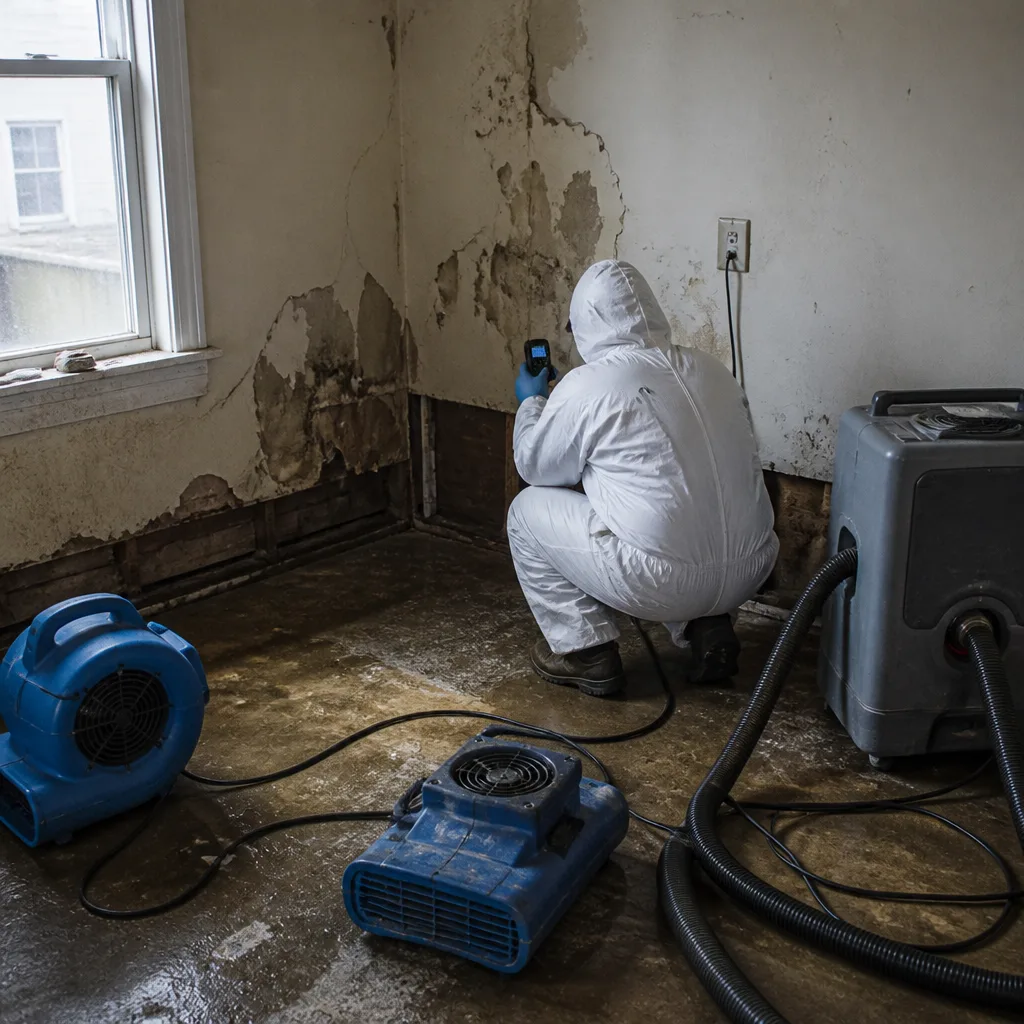 Before
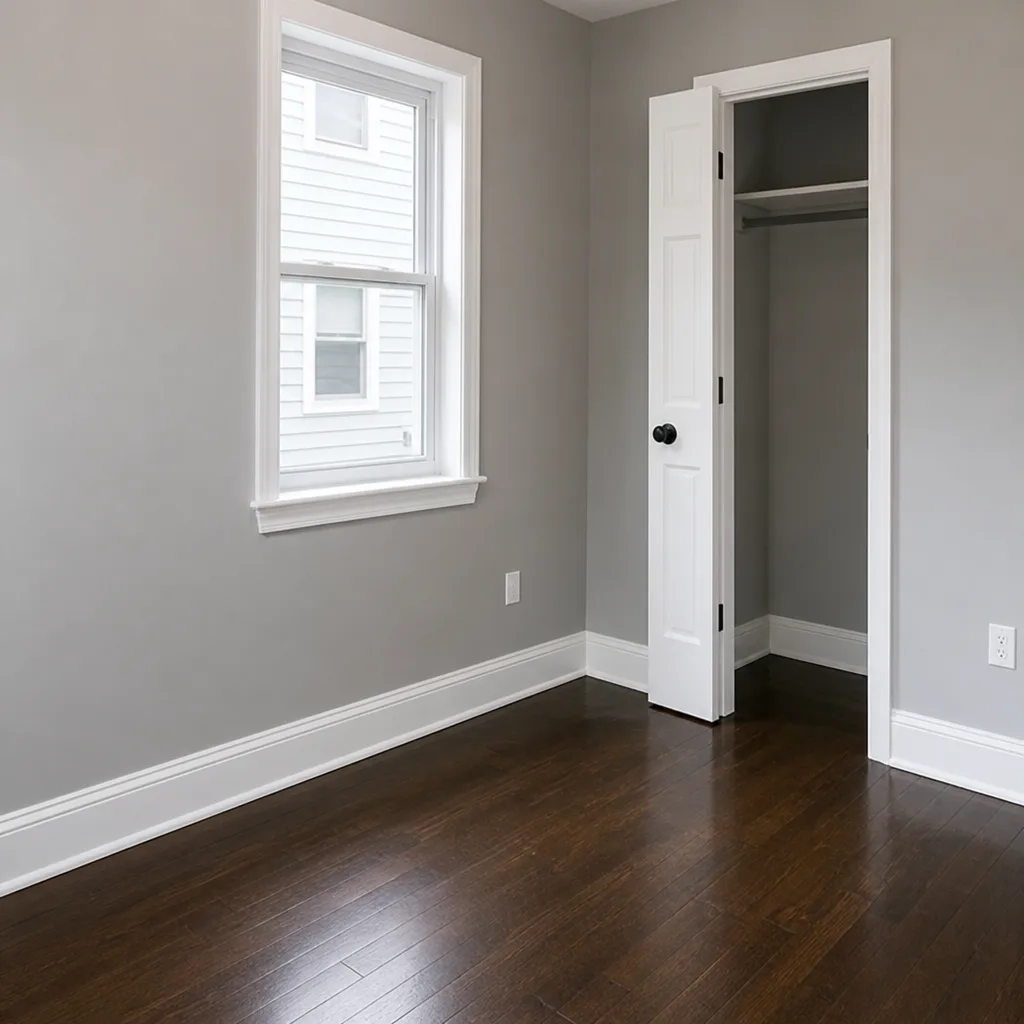 After
After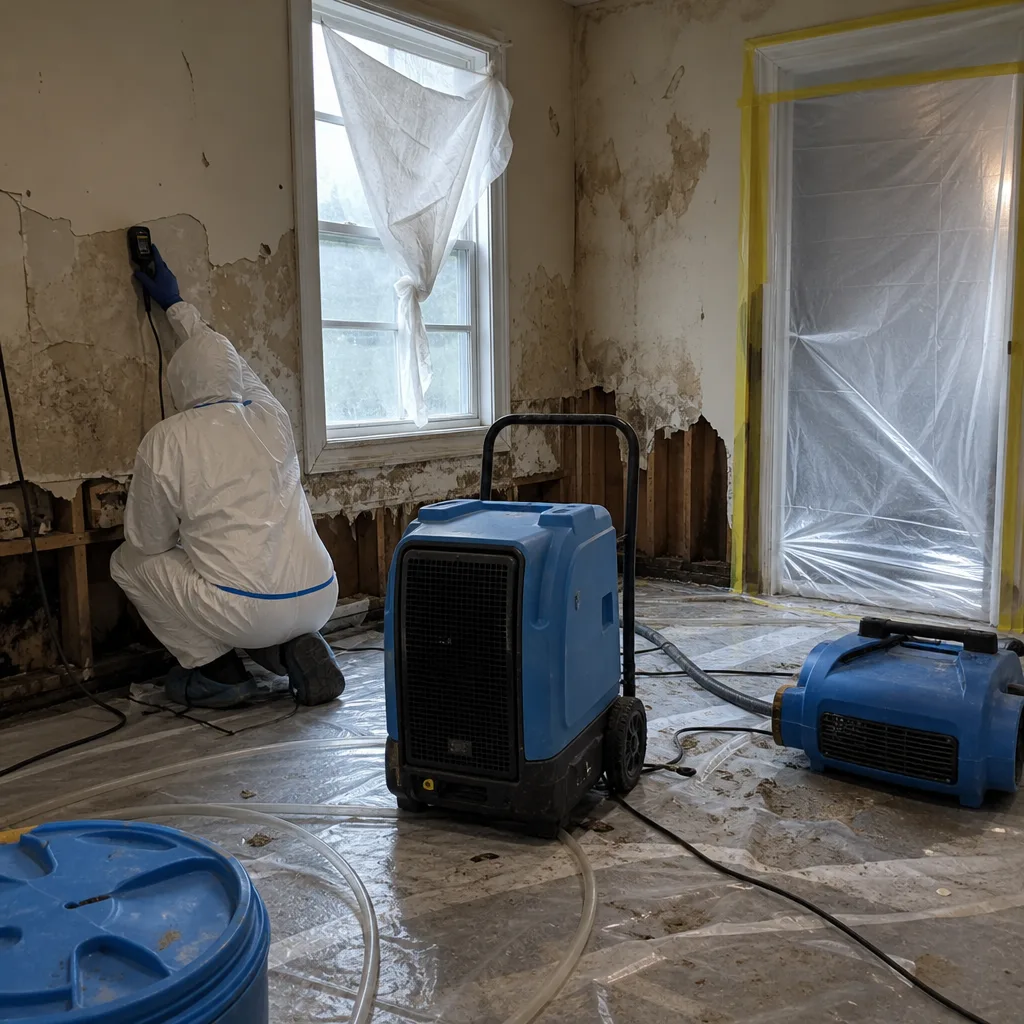 Before
 After
After Before
 After
After