
 Fire & smoke cleanup
 Water damage drying
 Mold remediation
 Storm response
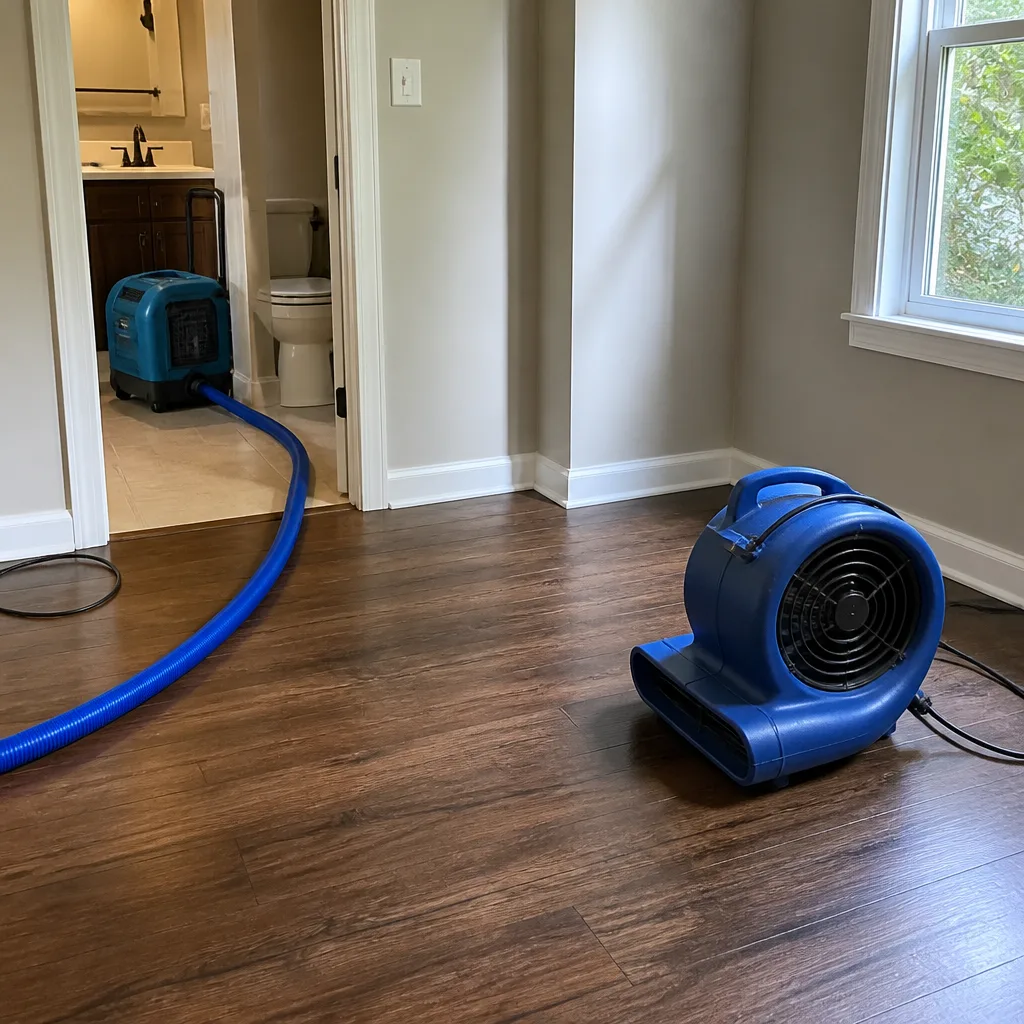 Sewage cleanup
 Reconstruction
Free visual inspection and a written scope of work before any mitigation begins - photos, moisture readings, and drying logs go in your claim file
The scope we write is the scope we bill. Anything new gets shown to you, in writing, before we touch it.
Get your free estimateRestoration work we handle
See the difference
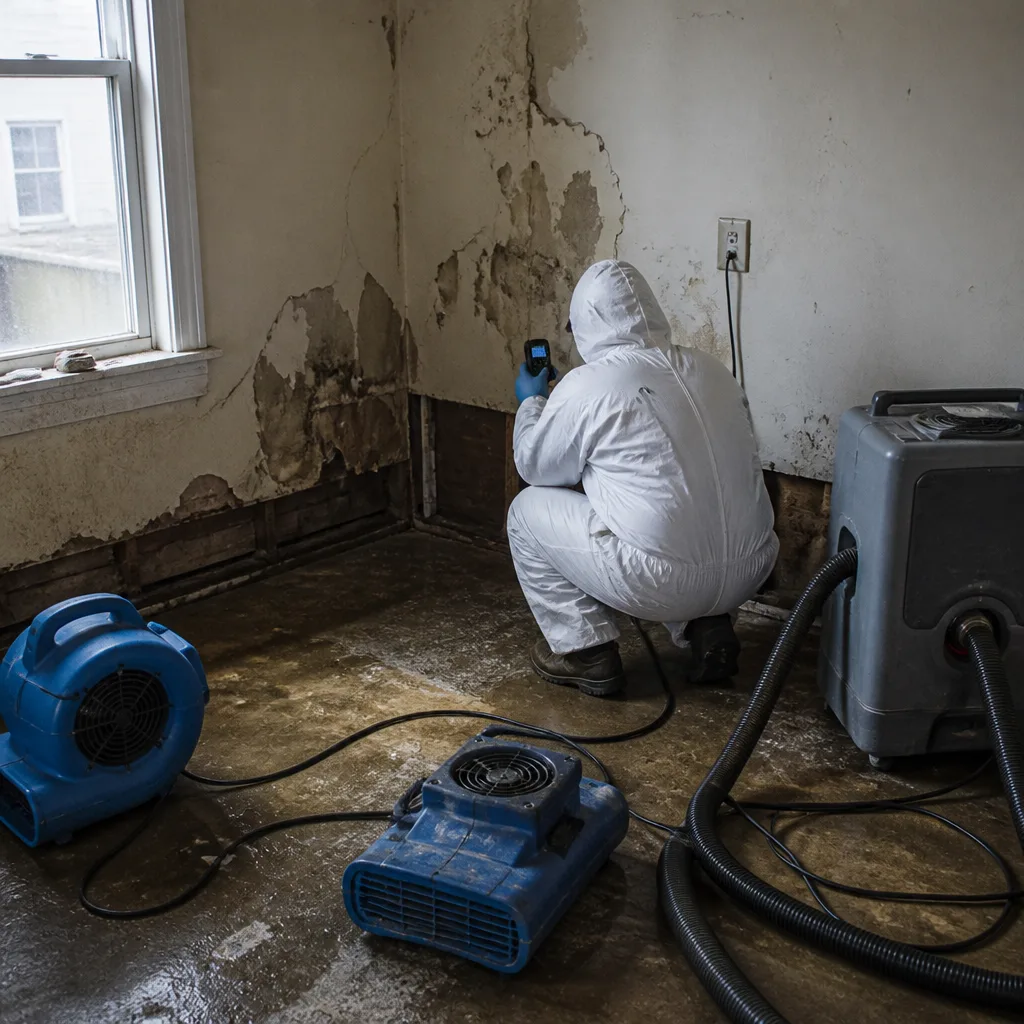 Before
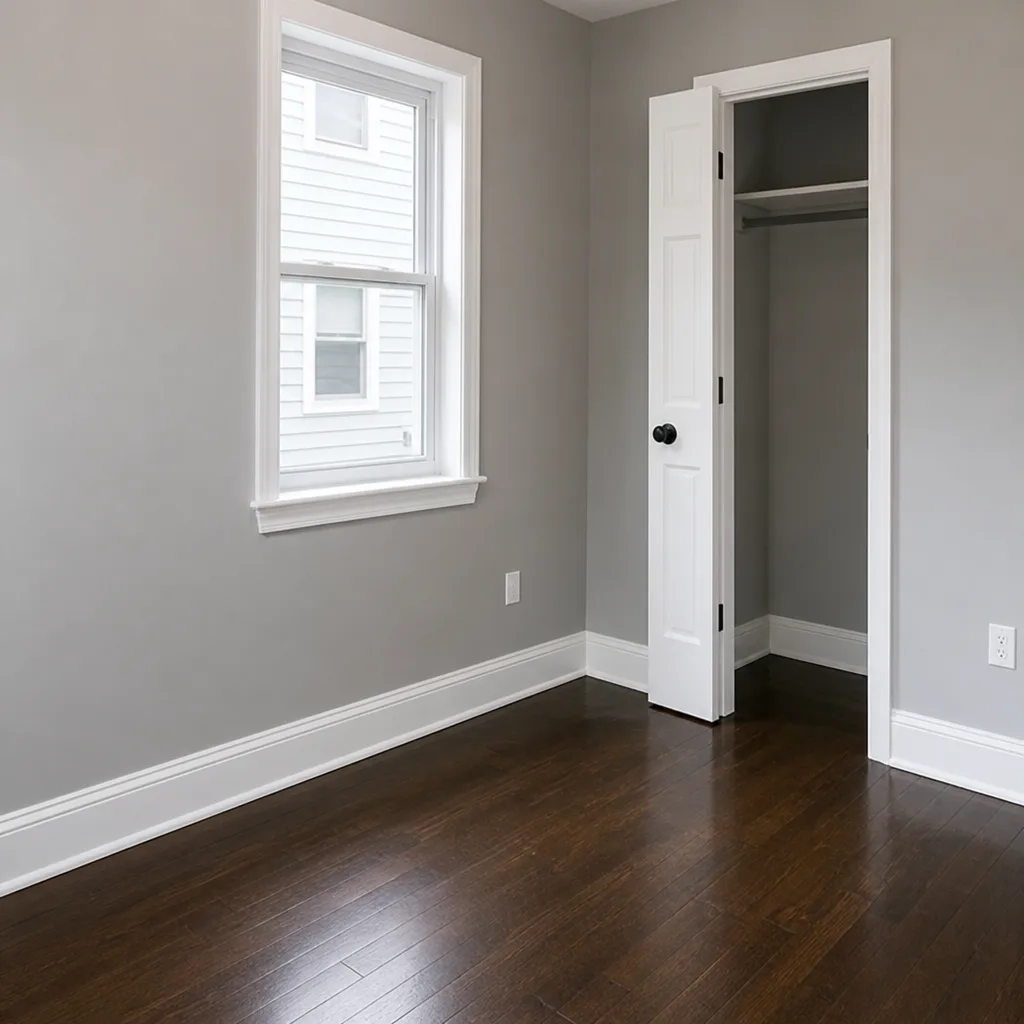 After
After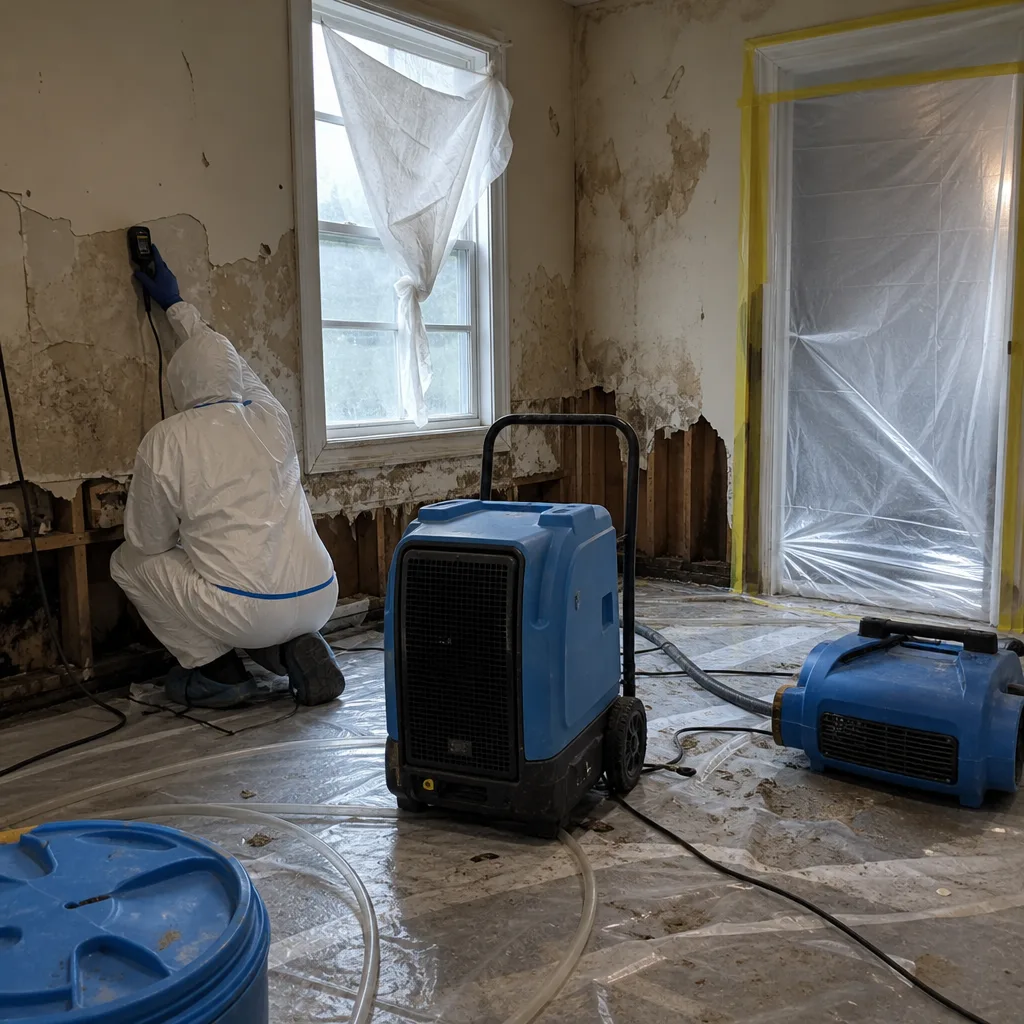 Before
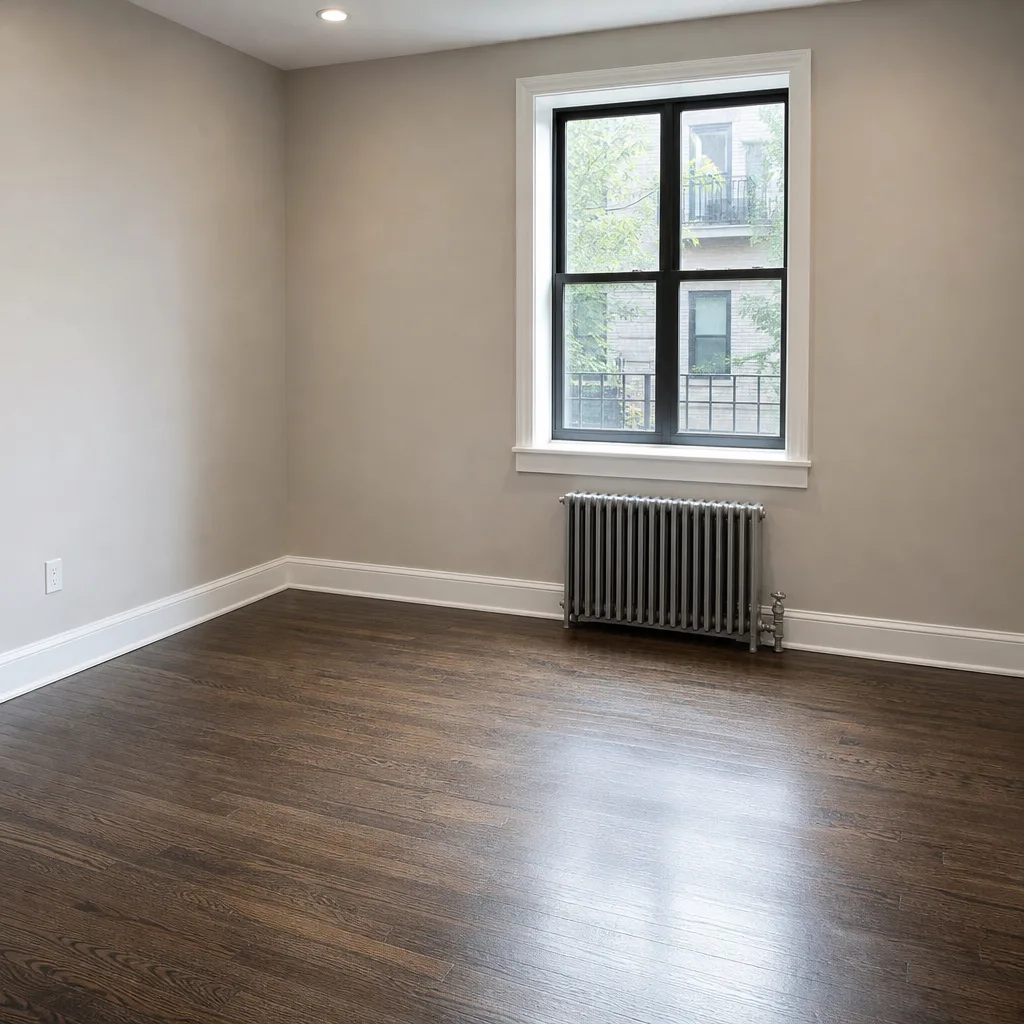 After
After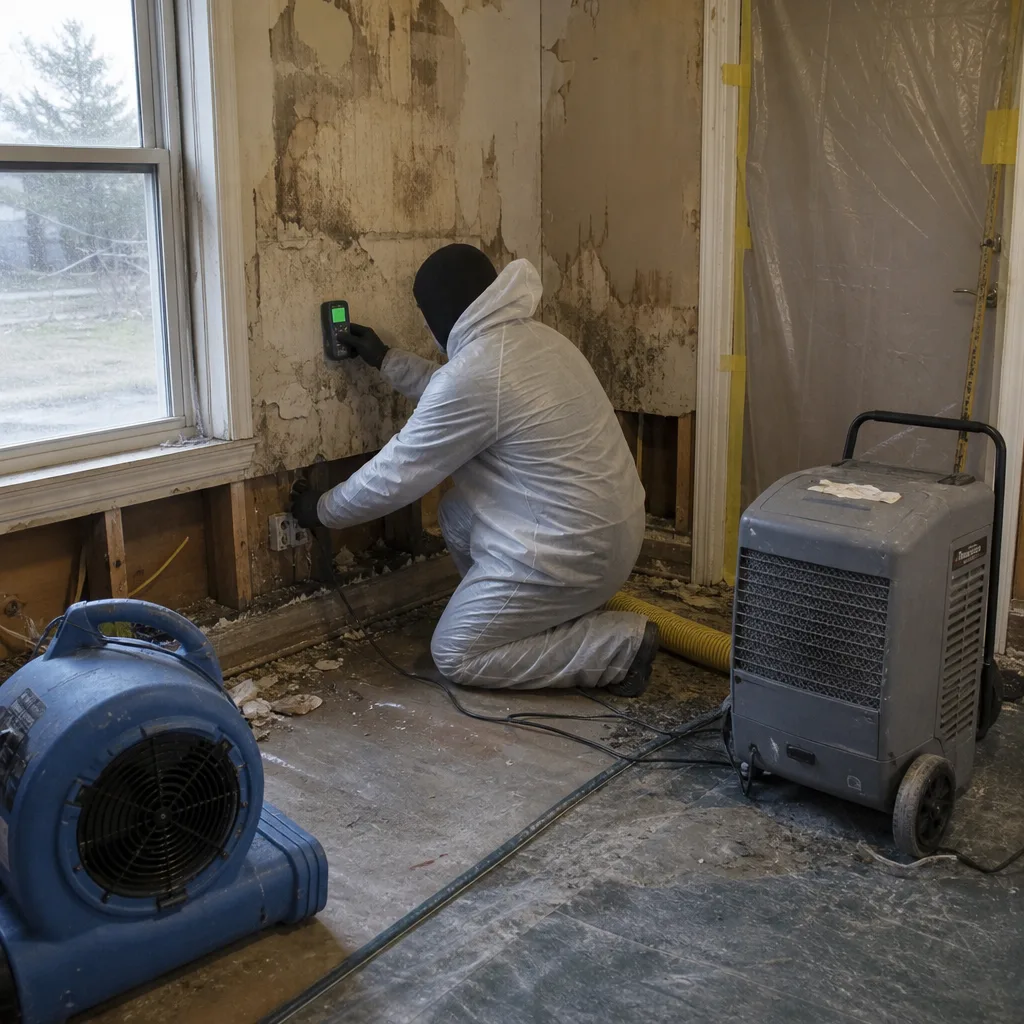 Before
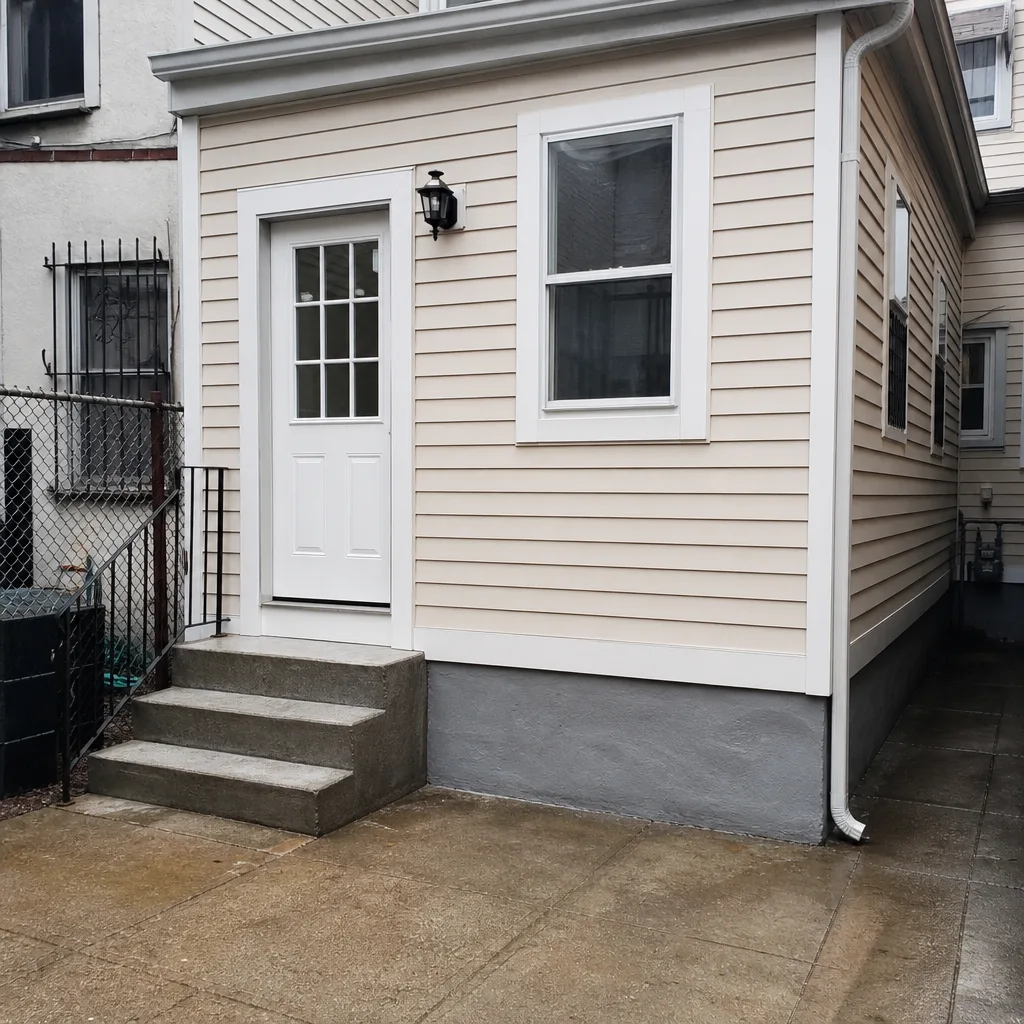 After
AfterHow Much Does Fire & Smoke Damage Restoration Cost in Brooklyn?
Fire and smoke damage restoration in Brooklyn typically costs between $2,800 and $8,500 for a moderate kitchen or single-room fire, with whole-floor or multi-room jobs running $12,000 to $35,000 or more. Small, contained incidents such as an oven fire with light soot coverage can start around $1,200 to $2,500. These are real Brooklyn market numbers from 2026, not national averages, because labor rates, building age, and access constraints here in Kings County shift pricing meaningfully.
Every fire is different, and the final number always depends on what burned, how hot it burned, and how far the smoke traveled. The fastest way to get an exact figure for your situation is to call (607) 399-3439. We give you a written price before any tool leaves the truck, and the number does not change at the door.
If you’re dealing with fire damage right now, our full service page walks through what we do on site: Fire & Smoke Damage Restoration in Brooklyn.
Fire & Smoke Damage Restoration Cost Breakdown (2026)
Here’s how the pricing actually breaks down across the services most Brooklyn homes need after a fire. The ranges reflect what we see in neighborhoods from Bay Ridge to Brownsville, Williamsburg to Midwood, in 2026.
| Service or Scope | Typical Cost Range (Brooklyn, 2026) | What It Covers |
|---|---|---|
| Assessment & inspection | $150 – $350 (often credited toward restoration if you proceed) | Structural inspection, smoke-travel mapping, soot type identification, moisture check |
| Small contained kitchen fire | $1,200 – $2,500 | Light soot on walls/cabinets, odor treatment in one room, minor surface cleaning |
| Moderate single-room fire | $2,800 – $8,500 | Full room soot removal, sealant, repainting, odor neutralizing, insulation replacement if needed |
| Multi-room / whole-floor fire | $12,000 – $35,000 | Multiple rooms, drywall removal/replacement, structural cleaning, full odor treatment, HVAC cleaning |
| Soot removal (per room) | $450 – $1,200 | Sponge cleaning of walls, ceilings, fixtures; includes chemical treatment |
| Smoke odor removal / thermal fogging (whole home) | $900 – $4,500 | Ozone or thermal fog treatment, hydroxyl generator rental time, HVAC duct odor treatment |
| Drywall removal & replacement | $3.50 – $6.50 per sq ft | Removal of charred or smoke-stained drywall, new drywall, taping, ready for paint |
| Content cleaning (furniture, clothing, personal items) | $500 – $3,000+ | Item-by-item soot removal, ultrasonic cleaning for hard goods, textile cleaning |
| HVAC system cleaning after smoke | $350 – $1,100 | Duct inspection, cleaning of return registers and supply vents, filter replacement |
| Emergency board-up / tarping | $300 – $1,200 | Securing broken windows, doors, or roof openings the same day |
These numbers are for a typical Brooklyn rowhouse, brownstone, or pre-war apartment. A newer high-rise condo with strict building permits and hoist requirements will run higher. A single-family detached home in Marine Park with easy street access will run lower.
One thing to understand: most insurance policies cover fire and smoke damage as a standard peril, minus your deductible. Your out-of-pocket portion may be significantly less than the full restoration cost. We work directly with insurance adjusters and provide the documentation they need, itemized and photographed, so the claim moves without guesswork.
What Affects Fire & Smoke Damage Restoration Pricing in Brooklyn
No two fires leave the same footprint. Here’s what moves the number up or down in this part of the city.
- What burned. A clean-burning natural gas fire leaves light soot. Electrical fires in older Brooklyn wiring produce dense, acidic smoke. Synthetics like foam sofa cushions and polyester carpet create thick black residue that soaks into every porous surface. Protein fires (meat, grease) leave a sticky, stubborn film. Cleaning after the wrong material burns takes two to three times longer.
- Building age and construction. Pre-war Brooklyn housing stock, which makes up much of Park Slope, Bed-Stuy, and Flatbush, has plaster walls that absorb smoke differently than the drywall in a 2010s condo in Downtown Brooklyn. Plaster absorbs less but releases odor more slowly. Brownstones built in the 1890s to 1920s also have shared wall cavities that carry smoke between floors and even between rowhouses.
- Smoke travel distance. Smoke goes where heat goes: up and outward. A fire in a basement can leave residue on the third floor. The further smoke travels, the more rooms need treatment. We use the term “smoke migration mapping” which is plain English for tracking where the particles went. In tight Brooklyn layouts with stairwells and shared shafts, migration is usually broader than homeowners expect.
- Access and logistics. A fourth-floor walk-up in Cobble Hill with no elevator means every piece of equipment goes up the stairs by hand. A brownstone with a narrow service entrance adds time. Street parking for our drying and air-scrubbing equipment can be a challenge in dense areas like Sunset Park. All of that shows up in the labor line item, honestly and itemized.
- Odor penetration depth. Smoke smell is the hardest thing to eliminate, not the easiest. Porous materials, insulation, ductwork, the space behind baseboards, all hold odor. Some jobs need full surface sealing with a shellac-based sealer before repainting. Some need insulation replacement. Odor work can add 20 to 40 percent to a job if the fire burned hot and long.
- Water damage from firefighting. Almost every fire in Brooklyn involves water. Sprinklers, the FDNY response, the hose work. Water soaks floors, walls, and the cavities between them. That’s why our crews handle both fire and water restoration together. If the water sat for more than 24 to 48 hours, you may also need mold prevention treatment, which adds cost. Our home page explains how the full restoration process works from the first call.
How to Save on Fire & Smoke Damage Restoration
Nobody budgets for a fire. Here are the practical moves that actually reduce your final bill in Brooklyn, without cutting corners that create problems later.
- Call immediately. The longer soot sits on surfaces, the more it bonds. In the first 24 hours, soot sits on top as a film and wipes away. After a week, it etches into paint, varnish, and even glass. A fast call is the single biggest money saver. Our line is answered by a real person at any hour: (607) 399-3439.
- Don’t pre-clean with household products. This is counterintuitive but important. Many homeowners try to wipe soot with a damp rag or spray cleaner. That pushes soot further into the surface and sets stains permanently. What would have been a $450 per-room sponge treatment becomes a $1,200 per-room full restoration. If you’re unsure, touch nothing and wait for the assessment.
- File the insurance claim properly. Fire damage is covered by standard homeowners and renters policies. Your deductible, typically $500 to $2,500 in Brooklyn, is often your main out-of-pocket cost. We provide the itemized documentation, photographs, and moisture readings adjusters need to approve the scope. A claim that is documented correctly from day one gets approved faster and with fewer revisions.
- Ask for an itemized written price before work starts. This is not a “tip” so much as the way every job should work. At Dryden, we write down the price, the scope, and the arrival window before any equipment is unloaded. No hourly open-ended billing. No “we’ll see what we find” surprises. That’s the Kingswell Way: say the price before the work.
- Address odor with heat-assisted drying and targeted sealing, not gutting. Some contractors default to ripping out every wall. Sometimes that’s necessary. Often, focused treatment, hydroxyl generators, and shellac sealing on affected surfaces gets the same result for less. We tell you when a surface can be saved and when it can’t. We make our money on getting it right, not on maximizing the tear-out.
A free estimate costs you nothing and gives you a real number. Call (607) 399-3439 and we’ll send a Brooklyn-based crew lead to assess the damage and hand you a written price on the spot.
The Restoration Process: Step by Step
Here’s the exact sequence we follow on every Brooklyn fire damage job, from the first call to the final walk-through. Knowing the steps helps you understand where the money goes.
- Call and speak to a person. You call (607) 399-3439. A live person answers, not a recording. We ask where the fire was, whether everyone is safe, whether the FDNY has cleared the building, and whether boarding is needed tonight. Then we give you a committed arrival window.
- Assessment and written price. A background-checked, uniformed technician arrives at the scheduled window, walks the property, and inspects soot type, smoke travel, water presence, and structural condition. You receive a written itemized price before any work begins. This is a Dryden rule, not a courtesy.
- Board-up and safety first. If windows are broken or the roof is compromised, we secure the property immediately. In Brooklyn, an unsecured property invites break-ins and further weather damage. This step is often covered by insurance as emergency mitigation.
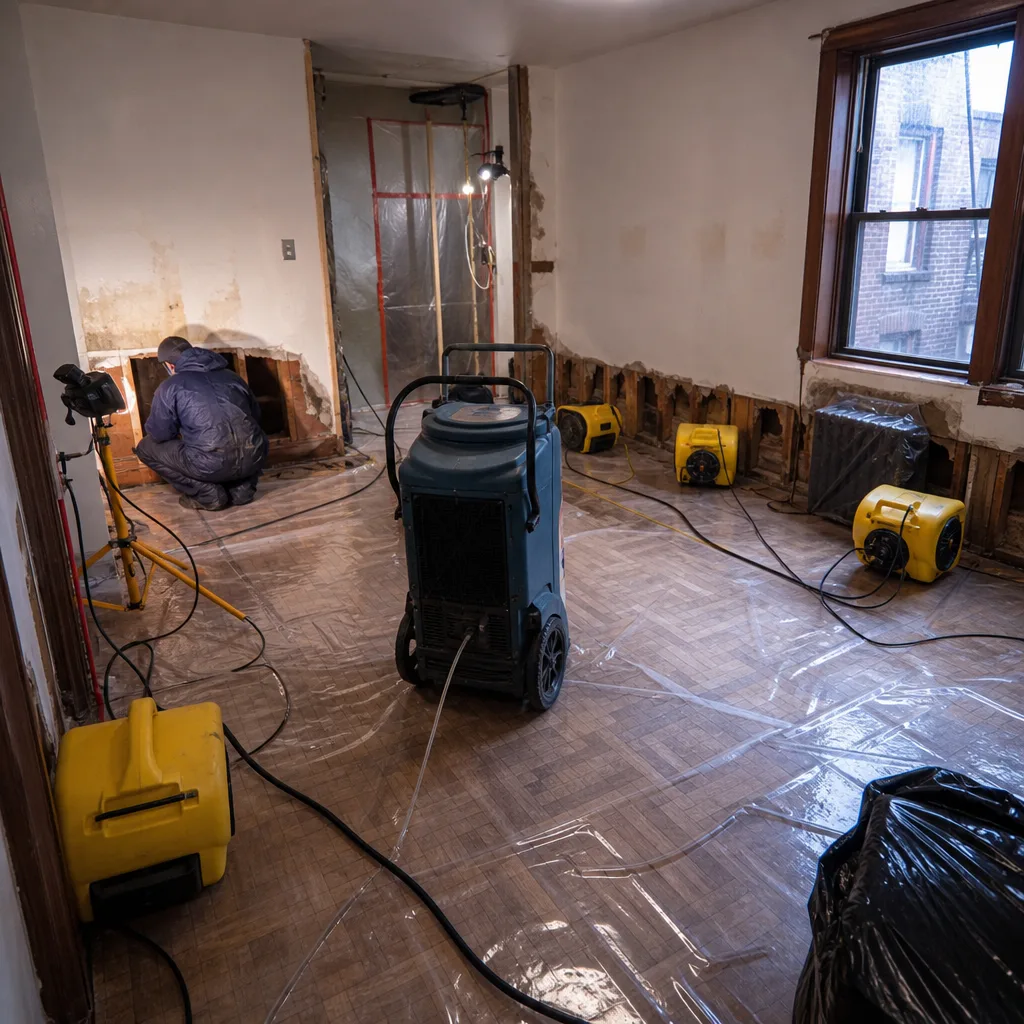
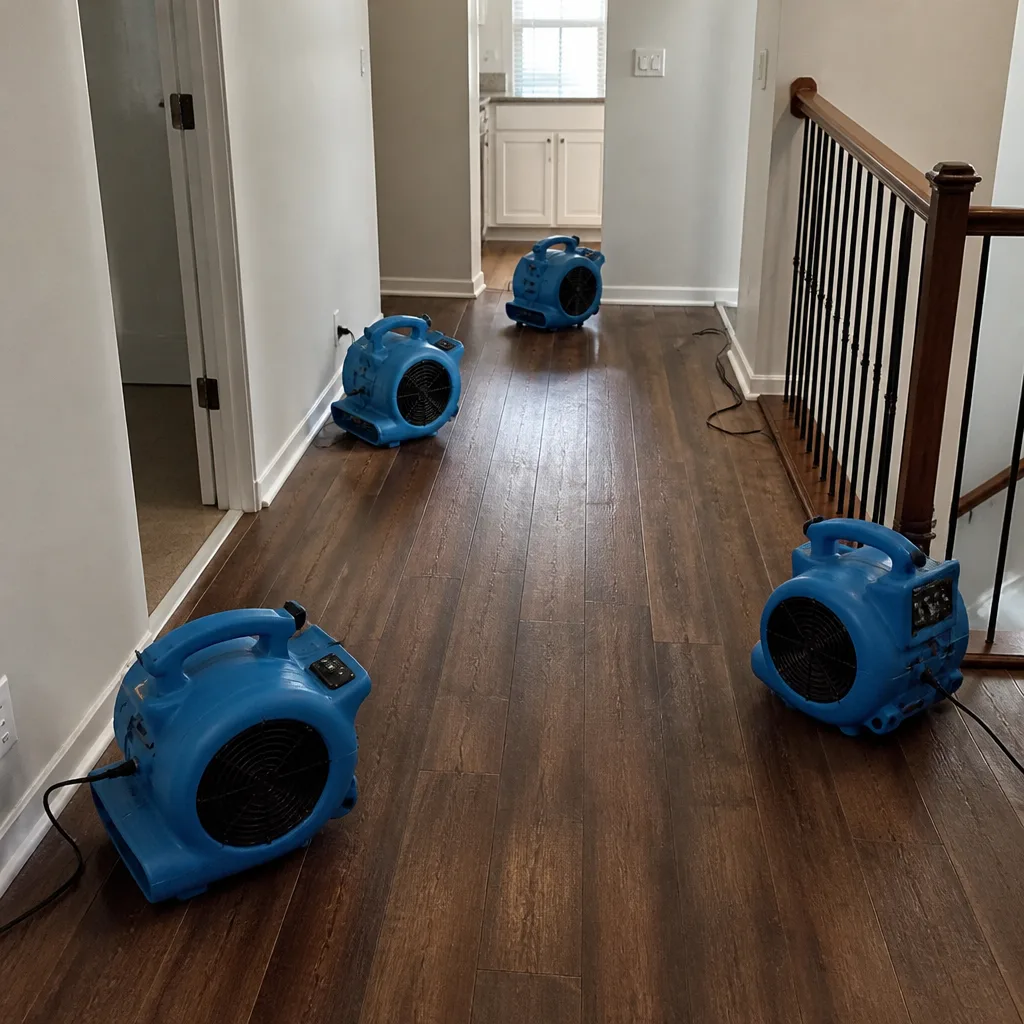
- Water extraction (if needed). Firefighting water gets pulled with professional extraction units, then the affected structure is treated with Dri-Eaz and Phoenix drying systems. This is where our approach matters. Bringing moisture content back to normal levels before sealing is called “psychrometric drying,” which means drying by measuring the actual moisture in the air and materials rather than guessing. We measure RH (relative humidity) in every affected room and track it until it’s stable.
- Soot and smoke residue removal. Dry sponge cleaning for walls and ceilings, ultrasonic cleaning for hard contents, and HEPA vacuuming for particulates. Different soot types require different cleaning agents. The smoky-smelling residue from a protein fire needs a different chemical than the dense black soot from burning plastic. We know which one you’re dealing with and use the right treatment.
- Odor neutralization. Hydroxyl generators and thermal fogging break down odor molecules that have settled into porous surfaces. In severe cases, we seal studs and surfaces with an odor-blocking shellac before repainting. This is the step that prevents the “I repainted but the smell came back in three months” problem.
- Structural repair and repainting. Replacing damaged drywall, refinishing wood, and repainting to match. We coordinate with your paint colors and finishes. The goal is that you can’t tell anything happened.
- Final cleaning and walk-through. The job site is left cleaner than we found it, which is one of the stated values of the Kingswell Way. You receive your written 365-Day Done Right Promise before we leave, detailing what is covered and how the free return visit works.
Why Fire Restoration Costs What It Costs in Brooklyn
Brooklyn pricing is different from national pricing, and even from Manhattan and Queens pricing, for reasons that are specific to this borough. If you’ve gotten quotes that seem way out of range, here’s what’s under the surface.
Labor is expensive and licensed
Restoration technicians in Brooklyn earn more than the national average because the cost of living here is high. Companies that pay their people fairly charge more per labor hour. We pay for trained, background-checked, uniformed staff who show up on time because that’s what actually works. The IICRC certification (Institute of Inspection, Cleaning and Restoration Certification) is the standard our crews train to, and that training is reflected in the quality of the work and the hourly rate.
Older buildings have tighter access and more surprises
A Brownstone built in 1910 in Bedford-Stuyvesant has plaster lathe, original wood framing, and shared walls that hold odor and water in unexpected places. A 2018 condo building in Williamsburg has modern drywall, taped seams, and fire-rated assemblies that are more predictable. Older construction means more scrutiny, more testing, and more treatment time. We’d rather measure carefully and tell you the accurate price than quote low and surprise you later.
Equipment matters and it costs real money
We run Dri-Eaz dehumidifiers, Phoenix air movers, XPOWER scrubbers, B-Air fans, and Injectidry systems. These are the same professional-grade machines used on commercial restoration sites. A single Dri-Eaz LGR (low-grain refrigerant) dehumidifier costs thousands of dollars, and a typical Brooklyn job runs several at once. Cheap equipment means slow drying, lingering odor, and a repair that fails months later. We don’t do that.
Insurance coordination takes time but protects your claim
Navigating a Brooklyn fire claim with the FDNY report, the adjuster, and the mortgage company takes administrative hours. Companies that don’t charge for that time make it up by cutting scope. We build coordination time into the estimate as a line item, and we do it because it affects whether you get fully reimbursed. When your claim closes, you’ll be glad the documentation was right.
FAQs – Fire & Smoke Damage Restoration Cost
How much does smoke damage cleanup cost per square foot in Brooklyn?
In Brooklyn, smoke damage cleanup runs $18 to $35 per square foot for moderate smoke residue, which means a 400-square-foot room costs roughly $7,200 to $14,000 when odor treatment, sealing, and repainting are included. Light soot-only jobs can run as low as $8 to $15 per square foot. Call (607) 399-3439 for an exact square-footage quote on your property. Estimates are free.
Is it cheaper to repair after a fire or replace everything?
Repair is almost always cheaper than replacement. A full gut-and-replace of a burned kitchen in Brooklyn costs $30,000 to $60,000, while restoration of the same kitchen costs $8,000 to $18,000 in most cases. Replacement is only recommended when structural integrity is compromised or when smoke has penetrated materials too deeply to recover. We tell you straight which route makes financial sense.
Will my insurance cover fire and smoke damage restoration?
Standard Brooklyn homeowners and renters policies cover fire and smoke damage as a named peril, meaning your out-of-pocket cost is usually just your deductible, which typically runs $500 to $2,500 in this market. If your policy has a higher deductible, that’s worth checking. We work directly with your adjuster and provide the itemized proof they need. Call (607) 399-3439 and we’ll walk through what your policy likely covers.
How long does fire and smoke restoration take in Brooklyn?
A small kitchen fire restoration takes 3 to 7 days of active work across drying, cleaning, odor treatment, and repainting. A whole-floor fire can take 2 to 4 weeks. Drying is usually the longest phase because Brooklyn’s humid summers slow evaporation. Our crews provide you a written timeline at the assessment so you know what to expect. A real person answers the phone any time at (607) 399-3439.
Can you come out today for a fire damage assessment?
Yes. We respond to Brooklyn fire damage calls the same day, including nights and weekends. Boarding and safety work can often be scheduled within hours of your call, and assessment pricing is credited toward restoration if you move forward with us. Call (607) 399-3439 now. You’ll speak to a person, not a machine.
What is the 365-Day Done Right Promise, and does it cost extra?
The 365-Day Done Right Promise is our written guarantee on every restoration repair. If any covered repair fails within one year, Dryden returns and makes it right at no charge. There’s no extra cost for the guarantee. It’s included on every job, documented in writing, and it’s the reason we can say what we say about our work. The trigger is simple: if something we repaired fails inside the year, you call, we come back, and we fix it. Free.
Call for a Free, No-Pressure Estimate
If you’re standing in a soot-covered kitchen or a smoke-filled hallway, the next step is simple. Call (607) 399-3439. A live person answers, day or night. We’ll ask a few questions, set a precise arrival window, and send a Brooklyn-based restoration lead to your door. You’ll get a written price before any work starts, a crew in Dryden uniform, and a 365-Day Done Right Promise in writing when the job is done.
Since 2005, Dryden Water Damage Restoration has been serving Brooklyn as an independently owned and operated Kingswell company. We work to IICRC, RIA, and IFA standards, run professional equipment from Dri-Eaz, Phoenix, XPOWER, B-Air, and Injectidry, and we answer the phone when you call. Let us help you get your home back.
Pricing reflects the Brooklyn market as of 2026. Dryden Restoration Brooklyn offers free estimates – call (607) 399-3439.
Written by Carl Brandt, Owner at Dryden Restoration Brooklyn, serving Brooklyn homeowners since 2005.
What Our Customers Say
"Fridge line leaked behind the cabinets for weeks. They found the hidden water, dried it properly, and checked it for a few days before signing off. Thorough and honest."
- Phil Hargis"Dishwasher leaked for who knows how long under the cabinets. They found the hidden moisture, dried it, and treated it so mold wouldn't start. Explained everything and stood behind it in writing."
- Hailey Brennan"Good work on water damage from a roof leak. There was some back and forth getting the final paperwork for insurance, took a few phone calls. But the actual drying and repair were done right."
- Roberto Salas