
 Mold remediation
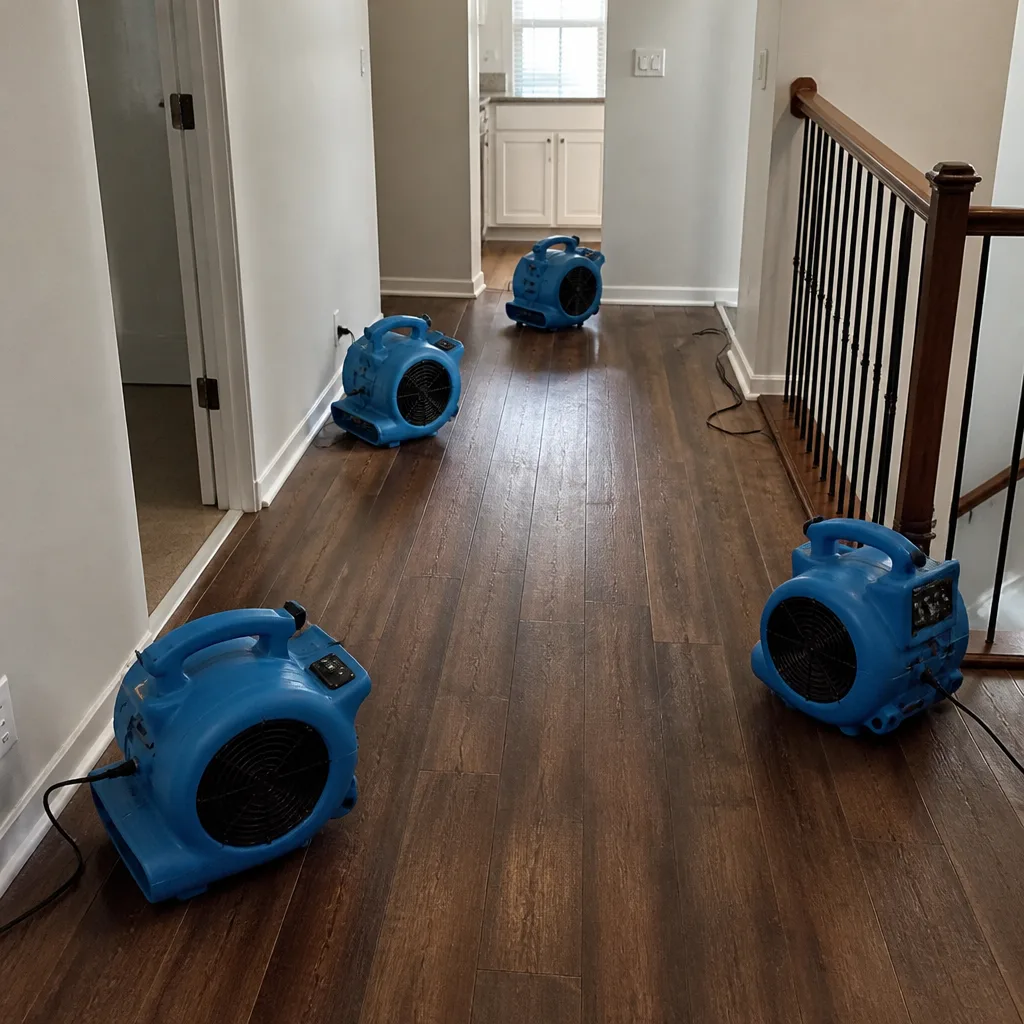 Water damage drying
 Fire & smoke cleanup
 Storm response
 Sewage cleanup
 Reconstruction
Free visual inspection and a written scope of work before any mitigation begins - photos, moisture readings, and drying logs go in your claim file
The scope we write is the scope we bill. Anything new gets shown to you, in writing, before we touch it.
Get your free estimateFast, Reliable Mold Remediation Across Midtown Manhattan
Mold remediation in Midtown Manhattan typically costs $1,800 to $6,500 for a contained, two-room cleanup, and most jobs can be started within 24 to 48 hours of the first call. What makes Midtown different from a house in the suburbs is the building itself. You’re not just treating a damp basement. You’re coordinating containment inside a 40-story tower with shared air shafts, vertical plumbing risers, and a co-op board or building manager who needs documentation before a single panel comes off the wall. We know that world. Call (607) 399-3439 and you’ll get a live person, a named arrival window, and a written price before any work begins.
Why Dryden Restoration Brooklyn Is Midtown Manhattan’s Preferred Mold Remediation Company
We’ve been doing this since 2005 as an independently owned and operated Kingswell company, and the jobs that define our reputation in Midtown Manhattan are the ones where a small leak became a building-wide problem because nobody caught it early. A supply line breaks on the 48th floor at 2 a.m. Water runs down inside a wall chase. By morning, the super is smelling something in the lobby three floors below the source, and two units on either side of the riser have elevated spore counts. That’s when we get called, and we arrive knowing exactly what questions to ask before we unload equipment.
Our technicians are background-checked, uniformed, and trained to the IICRC, RIA, and IFA standards that commercial restoration crews follow. Carl Brandt, who leads our team, insists on one thing above all: the written price comes before the first cut, and the written 365-Day Done Right Promise comes with every single job. If a covered repair fails inside a year, we come back and fix it at no charge. That’s the guarantee, signed, not spoken.
We answer the phone live, 24 hours a day, seven days a week. When someone in a Midtown high-rise calls at 11 p.m. with water running down an elevator shaft, they don’t get a voicemail. They get a person who starts coordinating riser isolation and elevator pit sump checks immediately.
Restoration work we handle
Mold Inspection in Midtown Manhattan
Mold Inspection in Midtown Manhattan usually means something different from what you’d expect in a suburban colonial. Building management or a co-op board called in a complaint. Maybe a tenant on the 12th floor reports a persistent musty smell near the return vent. Maybe an engineer flags elevated humidity readings in a mechanical closet. You need a mold inspection that answers the right questions: Where is the moisture coming from, how far has the problem spread, and what did it reach behind the drywall? A typical inspection in Midtown Manhattan runs $350 to $700, depending on how many rooms and air samples are involved.
When a High-Rise Needs More Than a Visual Walkthrough
In Midtown Manhattan, a visual inspection alone is rarely enough. Shared HVAC returns can transport spores from a damp mechanical room into apartments on other floors. We pull air samples, run moisture mapping on walls and floors, and check the relative humidity (RH) in chases and closets. RH tells us how much water is suspended in the air, which matters when central systems are re-circulating that air across multiple units. The goal is to find the source, not just the symptom.
What We Give You After the Inspection
You get a written report that includes moisture readings, a map of affected areas, and a line-item scope of work with a dollar figure attached. No vague findings. No open-ended estimate. If mold is present, we explain exactly what needs to happen, why it needs to happen, and what it will cost before you approve anything.
Mold Removal Specialist in Midtown Manhattan
A Mold Removal Specialist in Midtown Manhattan is someone who understands that containment must protect people 20 floors away, not just the unit where the mold is growing. In a single-family home, you can seal the affected room and run negative air. In a pre-war co-op on Park Avenue or a luxury condo near Columbus Circle, you’re working inside a pressurized building with shared floor assemblies and a central core. Open a wall cavity without negative pressure and you risk pushing spores into neighboring units through gaps around risers and conduit penetrations. That’s why we set up containment engineering, not just plastic sheeting.
Removal That Respects the Building Envelope
Most Midtown removal work is selective, not full-gutting. We remove only the material that’s actually wet or colonized, treat the framing, and dry the cavity to a target moisture content before closing it back up. On older plaster-and-lath assemblies, that takes patience and a moisture meter, not a demolition hammer. Typical mold removal in Midtown Manhattan runs $1,200 to $4,800 per affected room, depending on the extent of hidden damage.
The Containment Sequence We Use on High-Rise Jobs
We establish negative air inside the containment zone, meaning air flows in but not out, before any moldy material is disturbed. We run professional-grade air scrubbers. We seal elevator shafts and stair door gaps when the job is on a mid- to upper-floor unit, because vertical shafts act like chimneys for airborne particulate. These are the standards you see referenced in IICRC guidance, and they’re non-negotiable on a Midtown Manhattan job.
Trusted Brands We Service in Midtown Manhattan
We stock parts and bring equipment from the same brands commercial restoration crews use: Dri-Eaz dehumidifiers and air movers, Phoenix drying systems, XPOWER air scrubbers, and, when needed, Injectidry drying mats for hardwood and subfloor assemblies that can’t be pulled up. For a Midtown Manhattan customer, that matters because building management and insurance adjusters recognize these machines by name. It shortens the conversation when the claim is filed. We also keep a rolling inventory of common filter media, containment materials, and moisture mapping tools ready for same-week dispatch into Midtown. No waiting on a supply run from another borough.
Common Mold Remediation Problems We See in Midtown Manhattan Homes
- Hidden mold behind elevator shaft walls. Water from a high-floor leak doesn’t stay on the floor where it started. It follows gravity down the shaft, through mechanical rooms, into pit sumps. We check those lower spaces every time because mold in a mechanical room can circulate through shared return ducts for weeks before anyone sees it.
- Neighbor-unit spore migration through shared returns. Central HVAC systems in pre-war and post-war high-rises often share return risers. A damp spot in one unit can become an air quality complaint in three units down the hallway. Containment has to account for the building’s air balance, not just the affected room.
- Union labor and building management coordination. Many Midtown co-ops and condos require building staff or union trades to shut down risers, move elevator cars, or provide access to chases. We plan around those schedules from the first call so a negative-air zone is never left unattended overnight, which triggers tenant complaints and DOB questions.
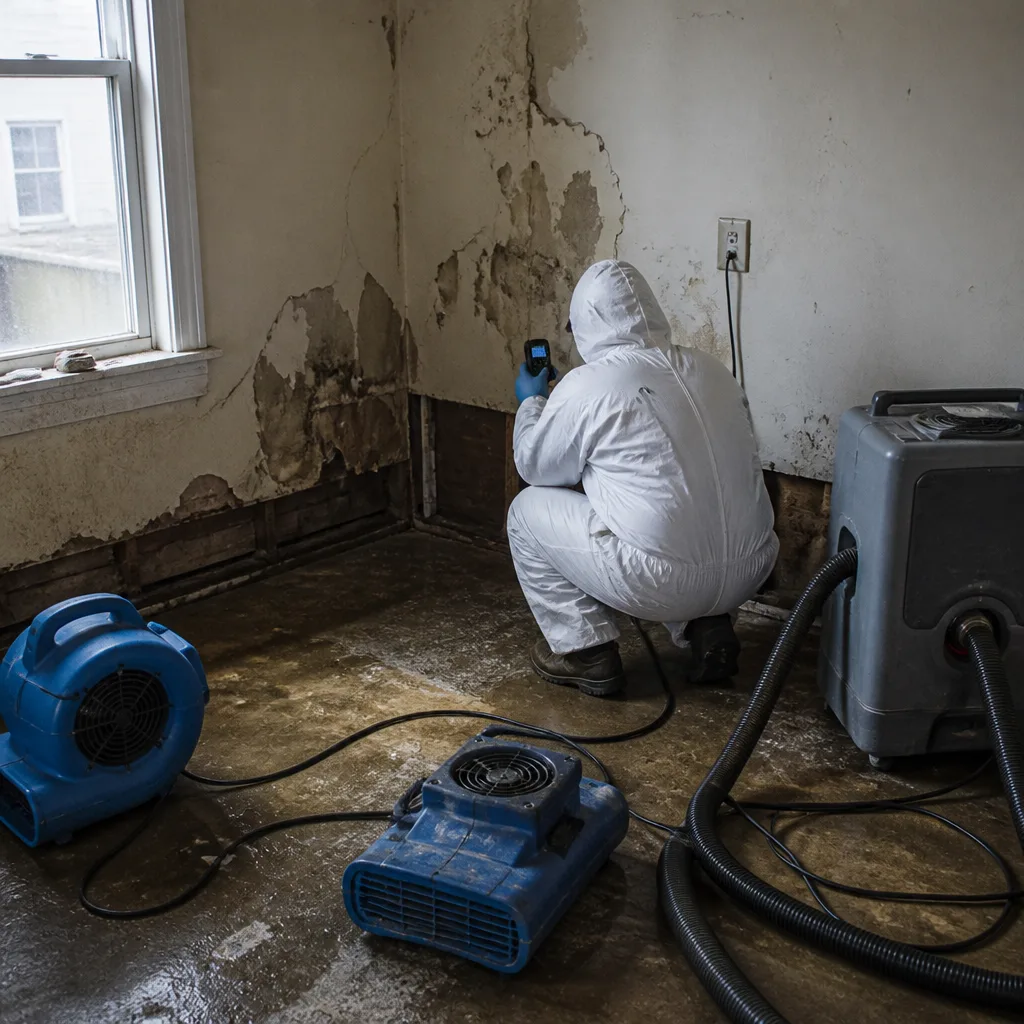
- Wet drywall behind kitchens and baths in converted office buildings. Pre-war office towers converted to residential in the 1990s and 2000s often ran plumbing through old mail chases and conduit runs. Those spaces are tight, poorly ventilated, and perfect for mold. We find it, scope it, and remove it without opening more of the wall than necessary.
See the difference
 Before
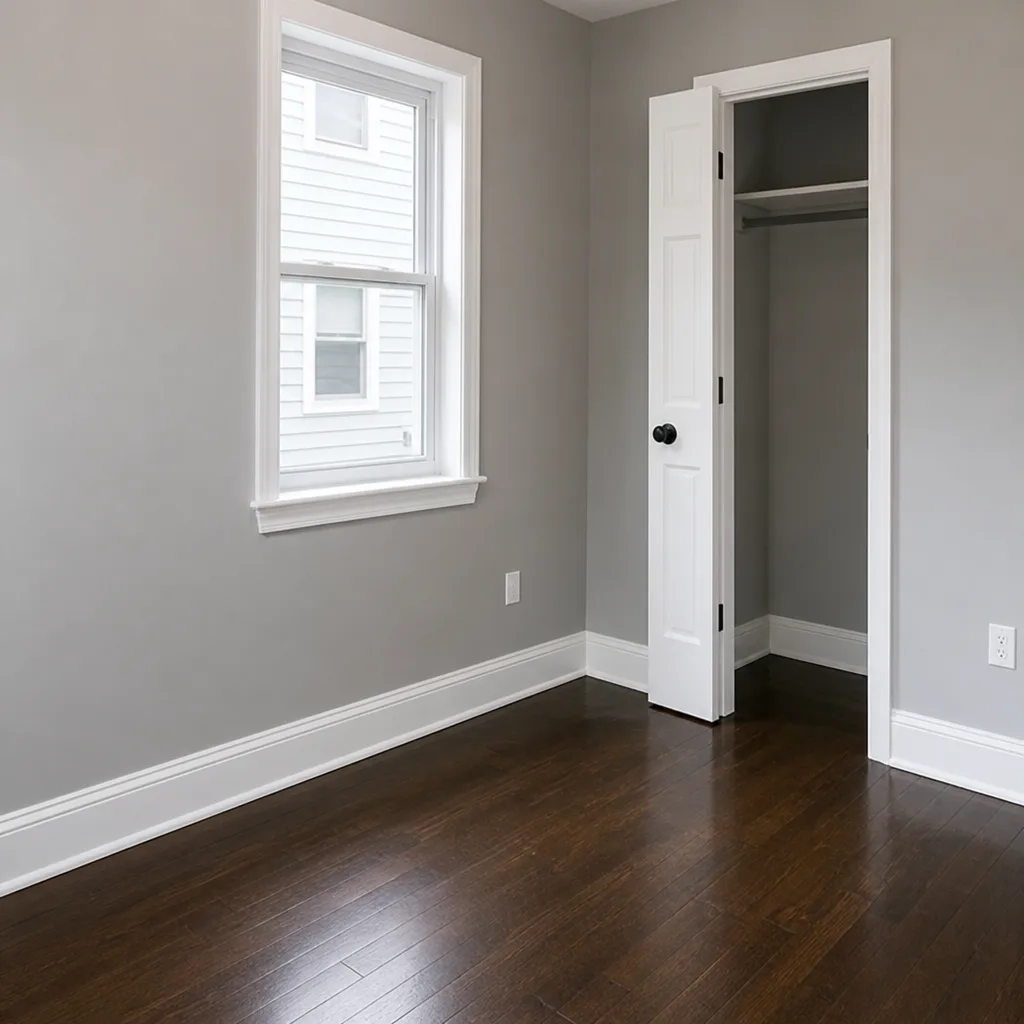 After
After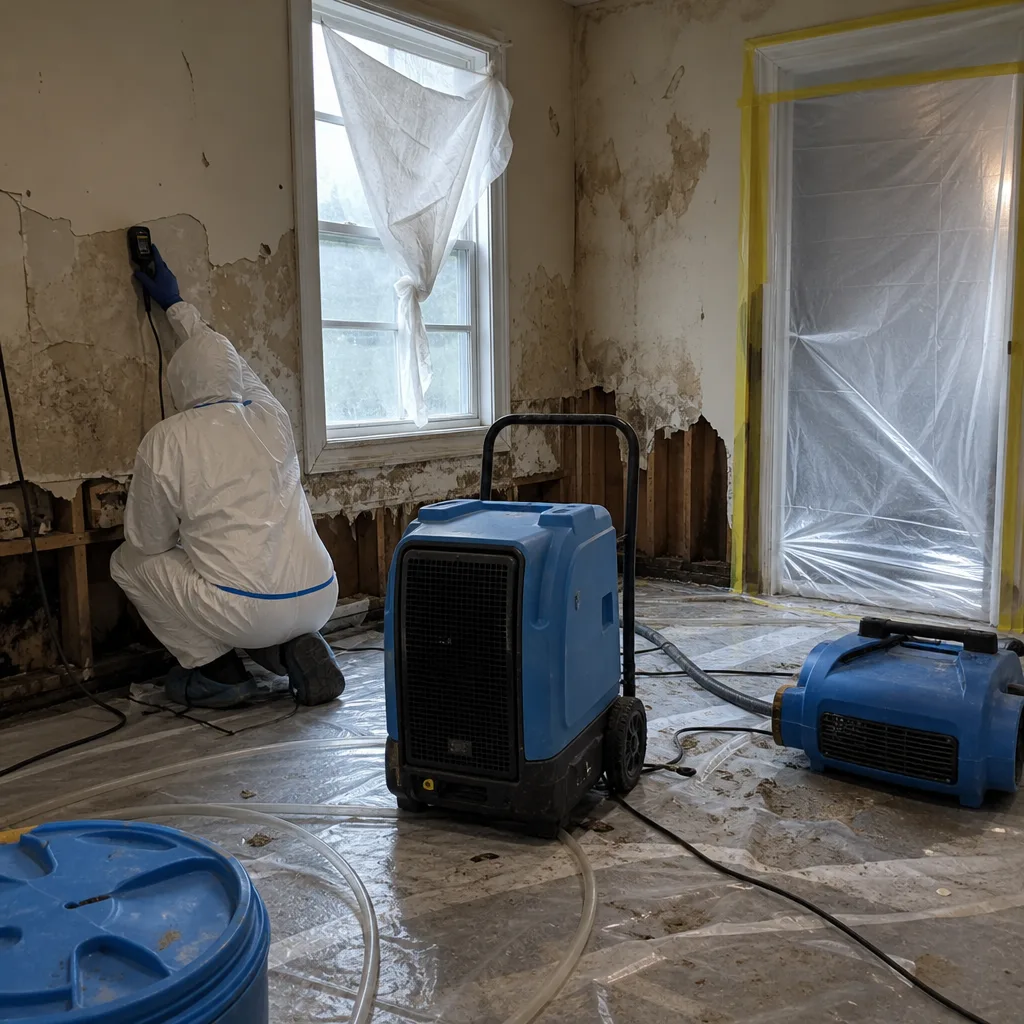 Before
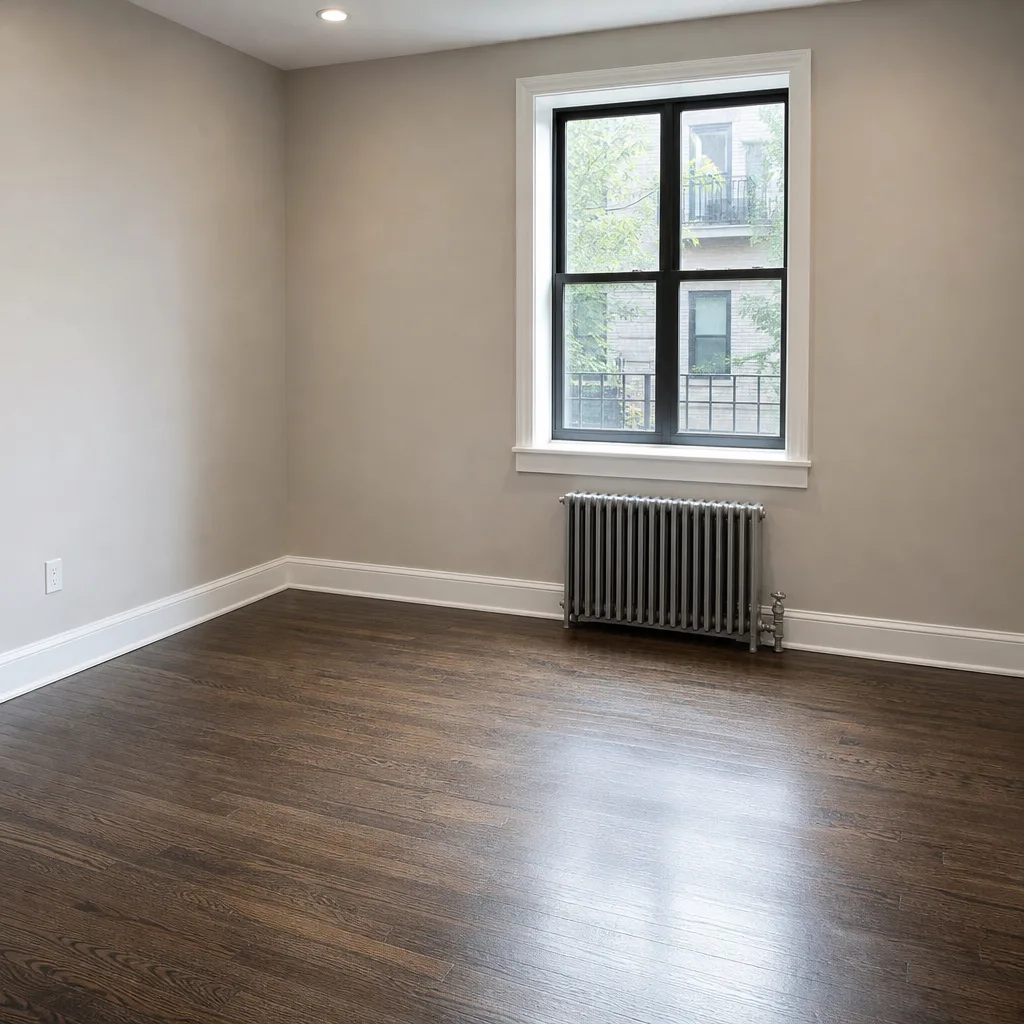 After
After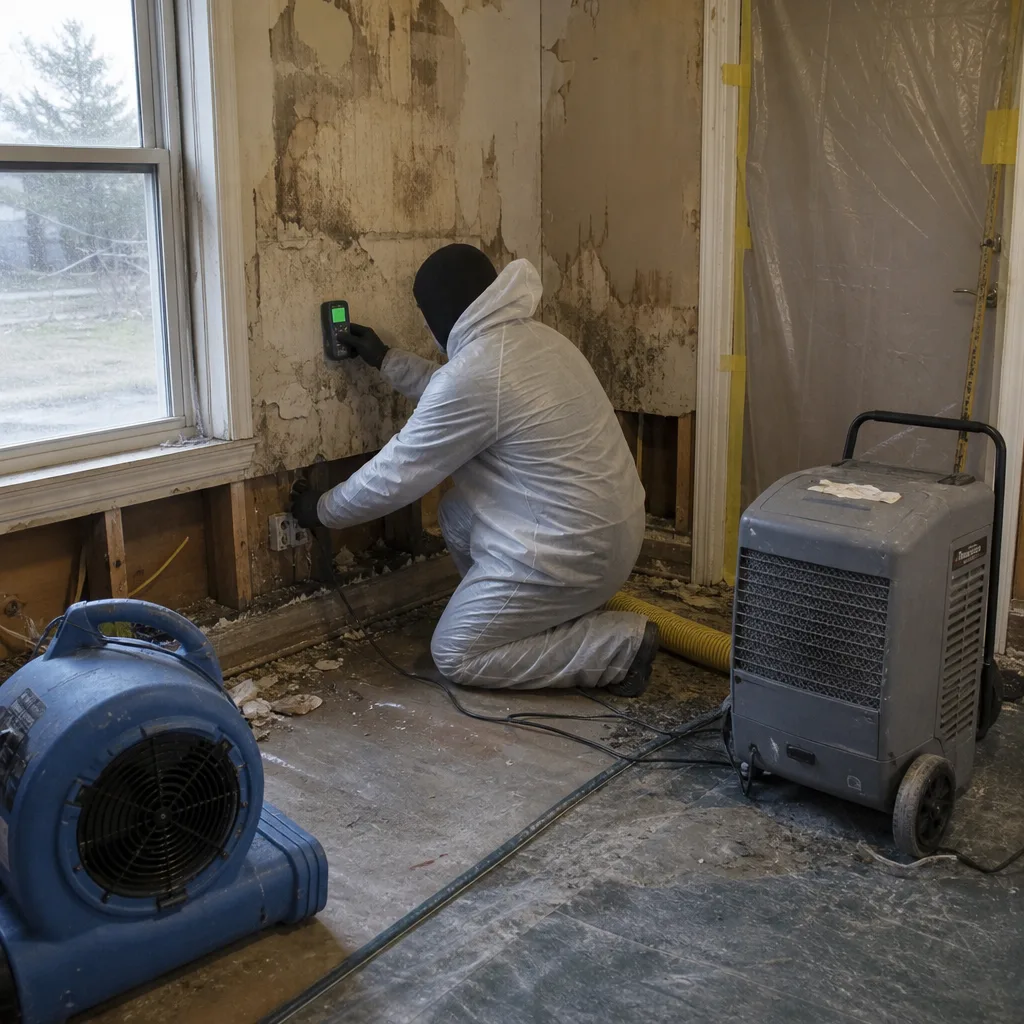 Before
 After
AfterPricing for Mold Remediation in Midtown Manhattan, NY
A standalone mold inspection in Midtown Manhattan typically runs $350 to $700. Mold removal in a single bathroom or closet with containment usually falls between $1,200 and $3,500. Larger jobs, like two or three rooms or a full hallway affected by a riser leak, run $4,000 to $8,000. Full-floor remediation after a major water event can reach $12,000 to $25,000, depending on surface area, ceiling access, and whether building engineering requires phased work to stay within DOB work-hour rules. Every estimate is a written, line-item scope before any work begins. If the repair fails within 365 days, we return and make it right at no cost. Call (607) 399-3439 for a free estimate.
We Also Serve Cities Near Midtown Manhattan
Our crews work throughout the five boroughs, and we regularly coordinate jobs in Mold Remediation in Midtown Manhattan alongside work in Brooklyn, New York, Williamsburg, and Bedford-Stuyvesant. If you’re in one of those neighborhoods and dealing with a damp wall, a musty closet, or a post-leak air quality issue, the same written pricing and Mold Remediation process applies.
Serving Midtown Manhattan, NY - Our Local Coverage Area
We’re based in the Midtown Manhattan area and know this community well. Use the map below to see our service coverage - if you’re nearby, we can almost certainly help.
FAQs About Mold Remediation in Midtown Manhattan
A Midtown Manhattan high-rise shares vertical risers, floor assemblies, and HVAC returns, so containment must protect tenants on other floors. In a single-family house, sealing one room and running negative air is enough. In a 50-story tower, you must also seal elevator doors, stairwell gaps, and shared return openings, or the pressure difference in the building’s air handling system pushes spores into neighboring units. Our containment plans account for that building air balance from the first hour.
No. In many Midtown co-op buildings, especially pre-war ones with plaster and lath assemblies, we can do selective removal. We cut only the lower portion of the wall where moisture traveled, treat the framing, dry the cavity to the right moisture content, and match the existing finish. What triggers a full wall opening is when moisture mapping shows the cavity is wet above the cut line or when air samples confirm active spore movement inside the chase. Your co-op board gets a written scope before that decision is made.
The first step is isolating the riser to stop the water source, and the second is checking elevator pit sumps and mechanical spaces below the break. Water from a 40th-floor line break will travel down inside the wall and through the shaft, often shorting electrical closets and creating hidden mold in equipment rooms ten or more floors below. A Midtown tech who knows high-rises goes straight to the shaft before looking at the visible drywall. We coordinate with building engineering to make sure the riser is secured and the affected floor is contained quickly.
DOB construction-work hour restrictions mean noisy or heavy demolition in Midtown Manhattan residential buildings is generally limited to weekday daytime hours, typically 7 a.m. to 6 p.m. That affects how we phase a job. We may perform containment setup and air scrubbing during off-hours but save actual demolition and removal for the approved window. It stretches the calendar slightly, but it protects you from violations, and we write that phasing into the estimate up front.
Yes. Mold doesn’t need the concrete itself to eat. It feeds on the paper facing of drywall, the wood backing of cabinets, dust settled inside wall cavities, and the paint and adhesives on surfaces. In a concrete and steel luxury condo, moisture that gets trapped behind a finished wall creates a microclimate where mold grows on those organic materials even though the structure itself is non-organic. That’s why moisture mapping is a standard part of our Midtown Manhattan inspections.
The Midtown Manhattan Reality Most Remediation Companies Don’t Talk About
In Midtown Manhattan, a mold remediation job often starts not with a visible colony but with a building management complaint about musty odors migrating through shared HVAC risers. DOB work-hour rules and union agreements in high-rises mean containment and negative air pressure must be engineered to protect tenants 20 floors away, not just the affected unit. The sequence is different here: you isolate the riser, you check the elevator pit, you pressurize correctly, and then you cut. A company that treats Midtown like a suburb is going to miss one of those steps, and the problem comes back, or the building gets a tenant complaint, or the DOB gets involved. We’ve worked the vertical buildings long enough to know the order that keeps everyone safe.
Last fall we were called to a pre-war co-op on West 57th Street after a category 2 water release from a failed riser pipe saturated drywall in a closet. Our techs set containment with negative air and used Dri-Eaz dehumidifiers and air movers, but the real challenge was matching the building’s plaster-and-lath assembly. We performed moisture mapping, removed only the affected lower three feet, and applied antimicrobial treatment before reinstalling with a pre-loss condition match that the co-op board approved. That’s what the job looks like here. Not a gut. A targeted, engineered repair.
If you’re dealing with mold, a musty smell, or a water event in Midtown Manhattan, call (607) 399-3439. You’ll speak with a live person. You’ll get a named arrival window. You’ll get a written price before any work starts, and a 365-Day Done Right Promise in writing when it’s done. That’s The Kingswell Way: say the price, show up in the window, leave it cleaner than we found it, and come back if it fails.
Written by Carl Brandt, Owner at Dryden Restoration Brooklyn, serving Midtown Manhattan with written pricing and the 365-Day Done Right Promise.