
Last updated October 16, 2026
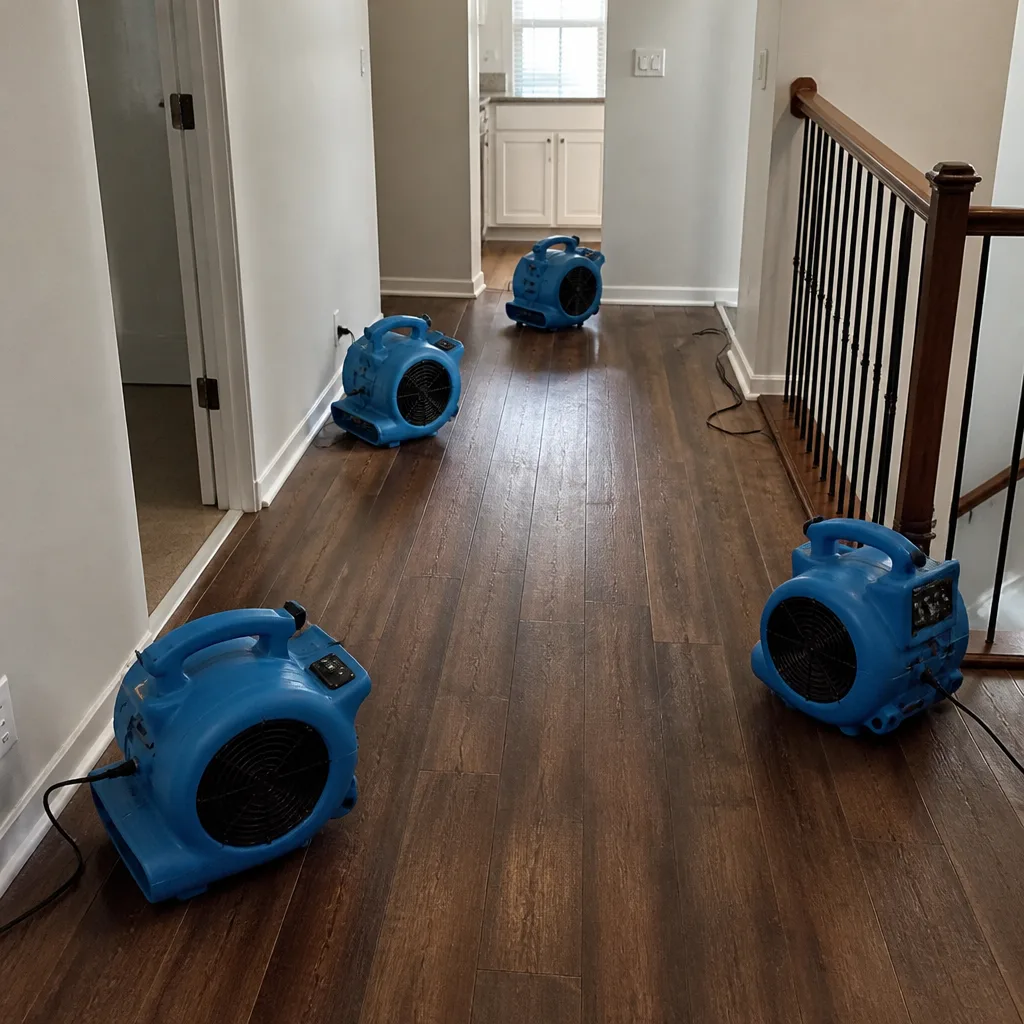 Water damage drying
 Fire & smoke cleanup
 Mold remediation
 Storm response
 Sewage cleanup
 Reconstruction
Free visual inspection and a written scope of work before any mitigation begins - photos, moisture readings, and drying logs go in your claim file
The scope we write is the scope we bill. Anything new gets shown to you, in writing, before we touch it.
Get your free estimateHow to Hire a Damage Restoration Contractor in Brooklyn: A Step-by-Step Guide
Storm-chasing restoration crews have been documented canvassing Brooklyn neighborhoods within hours of major weather events. A homeowner who signs a standard Authorization to Proceed form without reading it can unknowingly hand over control of their insurance claim. This guide walks you through the hiring process from a position of control: what to ask, what to get in writing, and how to spot the red flags before a contractor ever steps inside your home in Brooklyn. For broader context, see our Complete Guide to Damage Restoration in Brooklyn.
Restoration work we handle
Quick Answer
Hiring a damage restoration contractor in Brooklyn comes down to three things: verify IICRC credentials (specifically WRT, ASD, or AMRT depending on your damage), get a written scope of work with a written price and proof of insurance before anything is signed, and never sign an Assignment of Benefits without understanding that it transfers claim control to the contractor. Do those three things and you eliminate most of the risk that follows water, fire, or mold damage.
Table of Contents
- Why Restoration Hiring Is Different From Any Other Contractor
- Step 1: Verify IICRC Credentials and Ask for Specific Certifications
- Step 2: Get Three Documents Before Any Work Starts
- Step 3: Understand Assignment of Benefits Before You Sign Anything
- Step 4: Interview the Contractor With Specific Questions
- Step 5: Check References the Right Way
- Step 6: Understand Brooklyn Restoration Pricing
- Common Mistakes to Avoid
- When to Call a Professional
- Frequently Asked Questions
- The Bottom Line
Why Restoration Hiring Is Different From Any Other Contractor
Hiring a restoration contractor is not like hiring someone to remodel a bathroom. A remodeler works on your schedule. A restoration contractor works on the schedule of the damage. Water sitting in drywall for 48 hours grows mold. Smoke residue that isn’t neutralized within days etches into surfaces. The time pressure is real, and it changes how unscrupulous contractors behave. They know you’re stressed, they know your insurance is involved, and they know you’re making decisions faster than you’d like.
In Brooklyn, this pressure is amplified by density. Row houses and attached buildings mean one unit’s water damage can become a neighbor’s mold problem within a week. Basement flooding in neighborhoods like Park Slope and Bed-Stuy after a heavy storm can affect entire blocks at once. That’s when door-knockers appear. We’ve taken calls from homeowners in Flatbush who had three different contractors at their door by noon after a flood. None of them had ever been invited.
The wrong choice in the first 48 hours can cost more than the original damage. We’ve seen homeowners sign work orders that authorized demolition without a scope, then discovered that “mitigation” included ripping out cabinets that could have been dried and saved. The damage was $4,000. The unnecessary work added $15,000. This guide slows the process down just enough to prevent that.
You’re not just hiring labor. You’re hiring someone who will document evidence for your insurance claim, write estimates your adjuster will accept, and make calls about what can be saved versus what must be replaced. That person should be credentialed, insured, and willing to put everything in writing. Water Damage Restoration in Brooklyn requires a specific skill set that general contractors don’t always have.
Step 1: Verify IICRC Credentials and Ask for Specific Certifications
The acronym you’ll hear most in restoration is IICRC. It stands for the Institute of Inspection, Cleaning and Restoration Certification, and it’s the standard-setting body for the damage restoration industry. Being IICRC-certified means the technician has completed formal training and passed an exam in a specific discipline. It is not a state license, and it’s not a trade school diploma. It’s the restoration industry’s recognized benchmark for knowing how to dry a structure properly.
But “IICRC-certified” is too vague a phrase on its own. The IICRC issues certifications in distinct categories, and the one you need depends on your damage:
- WRT (Water Damage Restoration Technician): The foundational certification for water damage work. A technician with WRT has been trained in psychrometric drying (the science of moving air and controlling relative humidity, or RH, to pull moisture out of building materials) and understands how to categorize water damage by contamination level.
- ASD (Applied Structural Drying): A more advanced certification focused on drying the structure itself: floors, walls, subfloors, framing. A company that holds ASD certification has proven it can dry a building in place without unnecessary demolition.
- AMRT (Applied Microbial Remediation Technician): The certification specific to mold remediation. If you have mold, ask for this credential specifically. It covers containment, air filtration, and safe removal protocols.
- FSRT (Fire and Smoke Restoration Technician): The fire damage equivalent, covering soot behavior, smoke odor removal, and cleaning techniques for fire-affected homes.
In our experience at Dryden Restoration Brooklyn home, most legitimate restoration companies will tell you their certifications without hesitation. If a contractor hesitates when you ask “Who on your crew is WRT certified?” that’s a red flag. Not every crew member needs every certification, but the lead technician on your job should hold the one relevant to your damage.
Beyond IICRC, the RIA (Restoration Industry Association) publishes standards and ethics guidelines that reputable companies follow. Mentioning that you’re looking for IICRC and RIA-aligned standards signals to a contractor that you know what you’re talking about. That changes the conversation.
Step 2: Get Three Documents Before Any Work Starts
Before a single piece of equipment enters your Brooklyn home, you should have three documents in hand. Not verbal promises. Documents. If a contractor resists providing any one of them, that’s not a personality quirk. That’s a business practice, and you should find another contractor.
1. A Written Scope of Work
The scope of work is a detailed, line-by-line description of exactly what the contractor will do. It should specify which rooms will be worked on, what will be removed versus dried in place, what equipment will be used, and what the final condition will be. If the scope says “dry kitchen and adjacent areas,” that’s too vague. It should say “remove baseboards in kitchen, drill weep holes in wall cavities, install air movers and dehumidifier for 3 to 5 days, monitor moisture daily with penetrating meter.” Specificity matters because insurance adjusters compare the scope to the final invoice. A vague scope means disputed charges later.
2. A Written Price
The written price should match the written scope, line by line. Not an estimate that “might go up once we get in there.” A written price. The restoration industry standard is Xactimate, a software platform that standardizes restoration pricing lines, and many insurers use it to review claims. Contractors who write estimates in Xactimate speak the same language as your adjuster, which reduces disputes. You don’t need to know Xactimate. You do need to know the price on paper before work begins. At Dryden Restoration Brooklyn, every customer receives a written price before any work starts. The number does not change at the door.
3. Proof of Liability and Workers’ Compensation Insurance
Ask for certificates of insurance. A certificate of liability insurance proves the contractor has coverage if they damage your property. A certificate of workers’ compensation proves that if a technician is injured in your home, their employer’s insurance covers it, not your homeowner’s policy. In New York, workers’ comp is mandatory for employers, but some restoration companies misclassify workers as independent contractors to avoid carrying it. Demand the certificate. If a contractor tells you they “don’t need” workers’ comp because they’re a small operation, walk away. You could be liable if someone gets hurt.
Step 3: Understand Assignment of Benefits Before You Sign Anything
Here’s where the insurance process can quietly slip out of your hands. An Assignment of Benefits, usually called an AOB, is a legal document that transfers your rights to an insurance claim’s proceeds to a third party, in this case the contractor. Once you sign an AOB, the contractor can bill your insurance company directly and negotiate the claim on your behalf. That sounds convenient. It can also be a trap.
The problem is this: when you sign an AOB, the contractor has control over your claim, not you. If the contractor’s invoice is $20,000 and the insurer says the damage is worth $12,000, the contractor can dispute it, and you may be stuck in the middle with no direct control over the process. Worse, some contractors use AOBs to inflate charges and then file suit against the insurer when the claim is challenged, leaving the homeowner caught between two parties fighting over money.
In Brooklyn, post-disaster solicitation often centers on AOBs. A door-knocker shows up after a storm, promises to “handle everything with your insurance,” and pushes a stack of papers. The Authorization to Proceed form is often buried in that stack. That form may include an AOB clause. We’ve heard from too many homeowners who signed without reading and then couldn’t get their insurer to talk to them directly for months.
You don’t need an AOB for a contractor to do good work and get paid. You can hire a contractor directly, pay them, and submit the claim to your insurer yourself. If you do sign an AOB, read every line. Ask the contractor to show you exactly where the assignment language is and what it means in plain English. If they can’t or won’t explain it, don’t sign it. For mold damage specifically, Mold Remediation in Brooklyn should never start with an AOB you don’t fully understand.
Step 4: Interview the Contractor With Specific Questions
You’re hiring someone who will be in your home for days or weeks. Interview them. The goal isn’t to make them prove they can do the work; a competent contractor’s references and certifications do that. The goal is to hear how they answer questions that reveal their process. Here’s a numbered list of questions to ask, and what a good answer sounds like:
- “Who exactly will be in my home, and are they background-checked?” A good answer names the lead technician and confirms that every person entering your home is verified and uniformed. If the answer is vague, that’s a problem. At Dryden Restoration Brooklyn, every technician is background-checked and arrives in Dryden uniform, so you know who you’re letting in.
- “What equipment will you use, and why?” A competent water damage contractor answers with specific brands and functions: Dri-Eaz dehumidifiers, Phoenix axial air movers, XPOWER air scrubbers, Injectidry drying mats for hardwood floors. These are professional-grade machines, not the big-box-store units you can rent. A vague answer means a generalist.
- “How do you document the job for my insurance claim?” The answer should be photo documentation, moisture readings, and a written daily log. If the contractor says “we’ll talk to your adjuster,” that’s not documentation. Your claim depends on evidence, and a good restoration company creates it.
- “Will the final bill match the written estimate?” The answer should be yes, with the only variable being unforeseen conditions documented in writing. If the contractor laughs or says “everyone goes over,” that’s a red flag.
- “What happens if the repair fails after you leave?” Listen for a specific answer. A written guarantee with a defined duration and a stated remedy. We put our 365-Day Done Right Promise in writing on every job: if a covered repair fails within a year, we come back and fix it at no charge.
Step 5: Check References the Right Way
Most people ask a reference “were you happy with the work?” That’s a question with a binary answer that tells you almost nothing. The real question is whether the contractor behaved like a professional when things got difficult. The best references are from homeowners who had a dispute, or a surprise, or a delay. Here’s how to ask:
- “Did the final bill match the estimate?” If the bill was higher, why? Was the increase explained in writing before the extra work happened, or did it appear on the invoice?
- “How did they handle it when something went wrong?” Every restoration job has something go sideways. The question isn’t whether it happened; it’s how the contractor responded. Did they answer the phone? Did they come back? Did they argue about it?
- “Did your insurance adjuster accept their estimate?” This tells you whether the contractor’s pricing and documentation were credible. If the adjuster pushed back and the contractor navigated it professionally, that’s a good sign. If the adjuster rejected the estimate and the homeowner was left arguing with the insurer alone, that’s a red flag.
- “Would you hire them again for a different problem?” This is the only binary question worth asking, because it forces the reference to evaluate the contractor as a whole, not the one job they did.
In Brooklyn, you can also search public records for contractor complaints through the Department of Consumer and Worker Protection. Restoration contractors aren’t specifically licensed by the City, but general contractors are, and many restoration companies carry a home improvement contractor license. Check it. A company with a history of complaints is findable.
Step 6: Understand Brooklyn Restoration Pricing
Brooklyn restoration pricing follows Xactimate regional rates, which vary by zip code. Here are the realistic ranges we see in Brooklyn for common damage scenarios, based on current market conditions:
- Water mitigation (clean-water, single room): $3,000 to $6,000. This includes extraction, equipment setup, drying, monitoring, and removal of unsalvageable materials.
- Water mitigation (multi-room or gray water): $7,000 to $18,000. Gray water (from dishwashers, washing machines, or sump pump failures) requires sanitization and more aggressive material removal.
- Mold remediation (single room, contained): $2,500 to $8,000, depending on the affected square footage and whether structural wood is involved. Containment, HEPA air scrubbing, and disposal account for much of the cost.
- Fire and smoke restoration (full cleanup, no rebuild): $8,000 to $30,000, driven by soot behavior (how far smoke traveled), content cleaning, and odor neutralization.
These ranges are for mitigation and restoration, not reconstruction. Once studs are exposed and building back begins, you’re in Fire Damage Restoration in Brooklyn or reconstruction pricing, which is scoped and quoted differently. The key variable in water damage pricing is whether materials can be dried in place or must be removed. Drying in place is always cheaper, which is why a contractor with ASD-certified technicians is worth more than a generalist who defaults to demolition.
Common Mistakes to Avoid
- Signing an AOB without reading it. This transfers claim control to a contractor. Once signed, your leverage is gone. Read every line or don’t sign.
- Hiring the first door-knocker. Post-storm door-knocking in Brooklyn neighborhoods like Canarsie and Mill Basin is a known solicitation tactic. Legitimate companies don’t canvass for business after a flood.
- Accepting a verbal estimate. A verbal number is not a price. If it isn’t in writing before work starts, it isn’t real.
- Skipping the insurance certificate check. If a contractor’s workers’ comp lapsed and someone gets hurt in your home, your policy may be on the hook. Demand the certificate.
- Choosing the lowest bid without comparing scopes. A low bid often reflects a narrow scope. You’re not comparing apples to apples if one contractor is removing baseboards and another is removing entire walls.
- Waiting to mitigate. In Brooklyn’s attached housing stock, water damage does not stay in one unit. The 48-hour mold window is real.
When to Call a Professional
You need a professional restoration contractor the moment you spot water that has penetrated building materials, visible mold growth larger than a dinner plate, or smoke residue that covers more than a small area. Small spills and minor soot can often be handled with thorough cleaning. But water that has reached drywall, insulation, or hardwood flooring needs professional drying to prevent mold. Mold that has spread into wall cavities needs containment and controlled removal. And smoke damage needs chemical neutralization, not just wiping down surfaces. Dryden Restoration Brooklyn offers free estimates in Brooklyn. Call (607) 399-3439 to talk through what you’re seeing. A live person answers, 24 hours a day.
Frequently Asked Questions
Ask for the specific IICRC certification by name: WRT for water damage, ASD for structural drying, AMRT for mold, FSRT for fire. Then ask to see the certificate or verify it through the IICRC’s registry. Any contractor who claims certification but can’t produce the certificate is not certified.
You should only sign an AOB after reading the entire document and understanding that it transfers your insurance claim rights to the contractor. It’s not inherently a scam, but it’s a significant legal transfer. If you don’t fully understand it, don’t sign it. A reputable contractor will do the work without one.
Within 24 to 48 hours to prevent mold growth. Brooklyn’s older housing stock, especially pre-war buildings with plaster and lath, holds moisture differently than modern drywall, but the microbial growth window is the same. The faster you extract and dry, the less demolition is required.
Most standard Brooklyn homeowner’s policies cover sudden and accidental water damage (burst pipe, appliance failure), fire damage, and mold remediation if the mold resulted from a covered loss. Flood damage from rising water is excluded unless you carry a separate flood policy. Your restoration contractor’s documentation is critical to getting the claim approved.
Expect $3,000 to $6,000 for a single-room clean-water mitigation and $7,000 to $18,000 for multi-room or contaminated water scenarios. These ranges reflect Xactimate regional pricing for Brooklyn’s market and include equipment, labor, monitoring, and disposal.
Stop the water source if you can do so safely. Shut off electricity to affected areas at the breaker only if the panel is safely accessible and dry. Move small items to dry ground. Do not enter standing water in a basement if there’s any chance it’s in contact with electrical outlets or appliances. Then call a restoration contractor at (607) 399-3439. Document everything with photos for your claim.
The Bottom Line
The contractor you hire in the first 48 hours after damage determines whether your restoration goes smoothly or becomes a second disaster. Verify IICRC credentials specifically, not generically. Get the scope, the price, and the insurance certificates in writing. Read every document before you sign, especially anything with Assignment of Benefits language. Interview references about the final bill and how disputes were handled. In Brooklyn, dense attached housing means damage spreads fast, so speed matters, but speed without documentation is how homeowners get burned. For year-round preparedness tips, read our Seasonal Damage Restoration Care for Brooklyn: Year-Round Homeowner’s Guide. Our approach is the same on every job: a written price before work starts, background-checked uniformed technicians, professional-grade equipment from Dri-Eaz and Phoenix, and a 365-Day Done Right Promise in writing. That’s The Kingswell Way: say the price before the work, show up in the window we gave, leave the place cleaner than we found it, put the guarantee in writing, and come back if it fails.
Written by Carl Brandt, Owner at Dryden Restoration Brooklyn, serving Brooklyn since 2005. Explore more guides & resources on our blog.
See the difference
 Before
 After
After Before
 After
After Before
 After
After